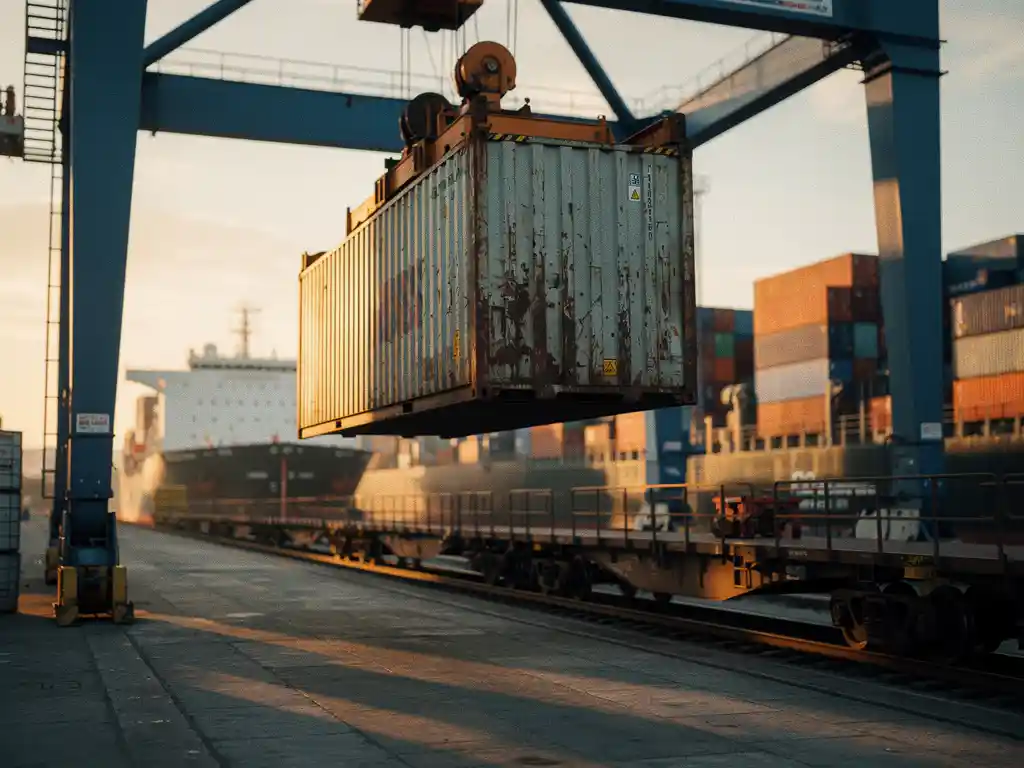
Groupage transport is one of the most flexible and cost-efficient freight solutions available to shippers moving smaller loads across Europe. But as supply chains grow more complex and sustainability pressures increase, many transport planners are asking whether groupage can extend beyond road networks and connect with rail or sea freight. The answer is yes, and understanding how to make it work can open up significant advantages for your operation.
This article walks you through everything you need to know about combining groupage transport with rail or sea freight, from the basics of how groupage works to the practical planning challenges and how smart tools can help you manage the complexity.
What is groupage transport and how does it work?
Groupage transport, also called less-than-truckload (LTL) or consolidated freight, is a shipping method in which multiple smaller consignments from different shippers are combined into a single vehicle or container. Each shipper pays only for the space their cargo occupies, making it a cost-effective alternative to booking a full truck for a partial load.
The process works through consolidation hubs. A carrier or freight forwarder collects shipments from various origins, brings them to a central depot, sorts and consolidates them by destination or route, and then dispatches them together. At the destination end, the load is deconsolidated and individual shipments are delivered to their respective recipients. This hub-and-spoke model is what makes groupage both efficient and scalable across wide distribution networks.
Can groupage transport be combined with rail or sea freight?
Yes, groupage transport can absolutely be combined with rail or sea freight. This approach is known as multimodal or intermodal transport, in which a single shipment moves across two or more transport modes under a coordinated plan. Groupage consignments are consolidated at a land-based hub, transferred to a rail or sea leg for the long-haul portion, and then deconsolidated and delivered by road at the destination.
In practice, this works particularly well for longer distances, where road transport alone becomes less competitive in terms of cost and emissions. Groupage cargo is packed into standardized containers or swap bodies that can move seamlessly between trucks, trains, and vessels without reloading the individual goods. Rail corridors across Europe and short-sea shipping routes along the Atlantic and Baltic coasts are increasingly used as the trunk leg in multimodal groupage flows. The key is that the consolidation logic remains the same, but the middle leg of the journey shifts to a different mode.
What are the benefits of combining groupage with rail or sea?
The main benefits of combining groupage transport with rail or sea freight are lower costs on long-haul legs, reduced carbon emissions, and less road congestion. For shippers with smaller loads that do not justify a full container, multimodal groupage offers access to the efficiency of bulk transport without the volume commitment.
Cost efficiency: Rail and short-sea shipping typically have lower cost-per-kilometer rates than road transport over long distances, and those savings can be passed on even when the load is shared across multiple shippers.
Sustainability: Rail produces significantly fewer emissions per ton-kilometer than road freight, making multimodal groupage a practical step toward greener logistics without sacrificing network coverage.
Capacity resilience: Using rail or sea as a trunk leg reduces dependence on road haulage capacity, which can be constrained during peak periods or affected by driver shortages.
Beyond these core advantages, multimodal groupage also supports compliance with increasingly strict European emissions regulations, which is becoming a meaningful factor in carrier and mode selection decisions.
What challenges come with multimodal groupage planning?
The biggest challenges in multimodal groupage planning are schedule coordination, transit time variability, and the increased complexity of tracking shipments across multiple carriers and modes. Each handoff point—whether a rail terminal, port, or intermodal hub—introduces a potential delay that can cascade through the entire consolidated load.
Unlike a direct road shipment, where a single carrier controls the entire journey, multimodal groupage involves multiple parties with their own systems, cut-off times, and operational constraints. A missed rail departure can mean a 24-hour delay for all shipments in that consolidation. Planners also face the challenge of aligning groupage cut-off times at origin hubs with fixed rail or vessel departure schedules, which leaves very little margin for late bookings or last-minute order changes.
Data fragmentation is another real obstacle. Tracking information from road legs, rail operators, and port systems rarely flows automatically into a single view, which means planners often spend significant time chasing status updates across multiple portals and phone calls rather than focusing on proactive coordination.
When should you choose multimodal groupage over full road transport?
Multimodal groupage makes the most sense when shipments travel distances of roughly 700 to 1,000 kilometers or more, when transit time flexibility allows for the additional handling at intermodal hubs, and when cost or emissions reduction is a priority. For shorter regional routes, the extra handling time and hub transfers often outweigh the savings.
It is also worth considering multimodal groupage when road capacity is tight or when your shipper base is pushing for measurable sustainability improvements. If your freight flows align with established rail corridors or short-sea routes, the infrastructure is already in place to support consolidation without building new processes from scratch. The decision ultimately comes down to balancing transit time requirements against cost and carbon targets, and that balance will differ for each lane and customer commitment.
How can AI transport planning tools simplify multimodal groupage?
AI transport planning tools simplify multimodal groupage by automating the consolidation logic, monitoring schedule adherence across modes in real time, and surfacing exceptions before they become disruptions. Instead of manually matching orders to departures and tracking shipments across disconnected systems, planners can work from a single coordinated view that adapts as conditions change.
Where traditional planning tools rely on static rules that cannot respond to a late rail arrival or a sudden order cancellation, AI-driven systems reason through the implications dynamically. They identify which shipments are affected, check alternative routing options, and generate a revised plan without requiring the planner to start from scratch. This is especially valuable in multimodal groupage, where the ripple effects of a single delay can affect many consignments from different shippers simultaneously.
The result is not a system that replaces the planner’s judgment, but one that handles the information processing so the planner can focus on decisions that genuinely require experience and context. AI tools learn alongside the planner over time, picking up on preferences, exceptions, and operational patterns specific to your network.
How LogicPlan helps with groupage transport planning
LogicPlan’s Groupage Planning Automation is built specifically to tackle the complexity that makes multimodal groupage difficult to manage at scale. Our AI agents analyze live order data, carrier constraints, and route parameters in real time to cluster shipments into optimized groups, including across rail and sea legs, without requiring you to migrate away from your existing TMS.
Real-time consolidation: Orders are grouped dynamically based on actual conditions, not static rules, so your groupage plans reflect what is happening now rather than what was true when the plan was built.
Exception handling: When a rail departure is missed or a cancellation comes in, the system identifies affected loads and generates a revised allocation plan automatically, reducing the Monday morning backlog from hours to minutes.
Planner-centric design: LogicPlan works alongside your team as a supportive tool, learning your planning patterns and preferences over time without replacing the judgment and experience that make a good planner valuable.
LogicPlan installs as a browser extension and is operational within minutes, meaning there is no lengthy implementation project standing between you and smarter groupage planning. If you are ready to reduce manual coordination time and bring real intelligence to your multimodal groupage operations, reach out to LogicPlan to see how it works in practice.
Frequently Asked Questions
How do I get started with multimodal groupage if my company has only used road freight before?
The best starting point is to audit your existing freight lanes and identify routes over 700–1,000 km where you regularly ship smaller, consolidated loads. From there, engage a freight forwarder or 3PL with established multimodal networks and ask specifically about their rail corridor or short-sea groupage services. You don't need to overhaul your entire operation at once — piloting one or two high-volume lanes is a low-risk way to build experience and measure results before scaling.
What types of cargo are not suitable for multimodal groupage?
Cargo that requires highly controlled temperature conditions throughout transit, extremely time-sensitive shipments with tight delivery windows, or goods that cannot tolerate additional handling at intermodal hubs (such as fragile, oversized, or hazardous materials with complex compliance requirements) may not be well-suited for multimodal groupage. The extra touchpoints at rail terminals and ports introduce handling steps that can increase risk for sensitive freight. Always assess your cargo's tolerance for transit time variability and physical handling before committing to a multimodal groupage solution.
How does pricing work for multimodal groupage — will I always pay less than full road transport?
Not always, and it depends heavily on the lane, distance, and current market rates for each mode. While rail and short-sea shipping offer lower cost-per-kilometer rates over long distances, the additional handling fees at intermodal hubs, longer transit times, and potential surcharges from multiple carriers can narrow the cost gap on some routes. The clearest savings typically appear on lanes exceeding 1,000 km, so it's worth running a lane-by-lane cost comparison rather than assuming multimodal groupage will always be cheaper.
What happens to my shipment's transit time when switching from road-only to multimodal groupage?
Transit times in multimodal groupage are generally longer than direct road transport due to the additional consolidation, hub transfer, and deconsolidation steps at each modal handoff point. Depending on the route, you might add one to three days compared to a direct road service. However, for long-distance lanes, the difference can be minimal if rail schedules are frequent and well-aligned with your cut-off times — and the cost and emissions savings often justify the trade-off.
How can I track my groupage shipment across multiple modes and carriers in real time?
This is one of the most common pain points in multimodal groupage, as road carriers, rail operators, and port systems typically use separate tracking platforms that don't communicate with each other automatically. The most practical solution is to work with a freight forwarder or technology platform that aggregates status updates from all carriers into a single dashboard. AI-powered transport planning tools, like LogicPlan, are specifically designed to unify this visibility layer so you're not manually chasing updates across multiple portals.
What are the most common mistakes companies make when implementing multimodal groupage?
The most frequent mistakes are underestimating the importance of cut-off time alignment between road collection and rail or vessel departures, failing to communicate transit time changes to end customers, and trying to manage multimodal complexity with tools built only for road planning. Companies also often overlook the need for standardized documentation across modes, which can cause delays at border crossings or terminal handoffs. Building clear internal processes for exception handling before you go live is just as important as choosing the right carrier partners.
How does multimodal groupage contribute to meeting European emissions regulations and sustainability targets?
Rail freight produces up to 75–80% fewer CO₂ emissions per ton-kilometer than road transport, meaning even a partial shift of your long-haul groupage flows to rail can generate measurable emissions reductions. These reductions can be documented and reported against frameworks like the EU's Corporate Sustainability Reporting Directive (CSRD) or Scope 3 emissions targets under GHG Protocol standards. Beyond compliance, demonstrating a concrete shift toward greener logistics is increasingly a commercial differentiator, as more shippers and end customers make sustainability a factor in their carrier and forwarder selection.
Next blog