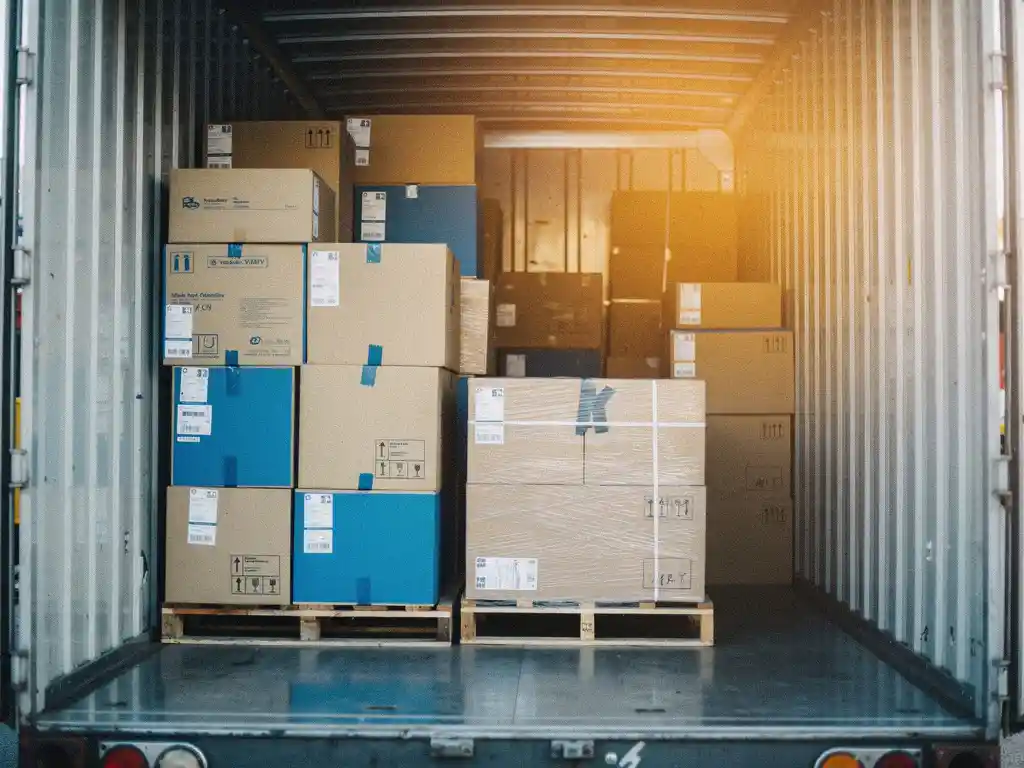
Groupage transport is one of the most efficient ways to move freight across Europe, but it is also one of the most vulnerable to delays. When multiple shipments from different shippers share the same vehicle, a single disruption can create a ripple effect that impacts every consignment on board. For transport planners managing dozens of consolidated loads daily, staying ahead of these disruptions is a constant challenge.
The good news is that most groupage delays are preventable—or at least manageable—when you have the right processes and tools in place. This article walks through the most common causes of delay, the strategies that work best to prevent them, and how smarter planning technology can support your team without replacing the judgment that experienced planners bring to the table every day.
What is groupage transport and why do delays happen?
Groupage transport, also known as less-than-truckload (LTL) or consolidated freight, is a shipping method in which multiple smaller shipments from different customers are combined into a single vehicle to share transport costs. Delays happen because every additional shipment in the load introduces a new variable, and when one variable changes, the entire plan can unravel.
Unlike full truckload transport, where one shipper controls the entire load, groupage relies on tight coordination between multiple parties. A single late pickup, an incorrectly labeled pallet, or a last-minute order change can push back the departure window for everyone else on the vehicle. The more stops a route includes, the more opportunities there are for something to go wrong. This is precisely why groupage planning demands a higher level of real-time awareness than almost any other transport model.
What are the most common causes of delays in groupage transport?
The most common causes of delays in groupage transport are late pickups, incomplete or incorrect documentation, unexpected traffic and road conditions, loading sequence errors, and last-minute cancellations or order changes. Each of these can independently cause a delay, but in groupage operations, they often compound one another.
Late pickups are particularly damaging because they affect every subsequent stop on the route. If a driver arrives at a depot 45 minutes late due to a previous delay, every delivery window after that is already compromised. Documentation issues, such as missing CMR forms or incorrect weight declarations, cause holdups at loading docks and border crossings that are difficult to recover from mid-route.
Late or missed pickups at collection points
Incorrect or missing freight documentation
Last-minute order changes or cancellations
Loading sequence errors that require reloading at the terminal
Understanding which of these causes occurs most frequently in your own operation is the first step toward building a more resilient groupage planning process.
How does real-time visibility help prevent groupage delays?
Real-time visibility helps prevent groupage delays by giving planners immediate awareness of exceptions as they happen, rather than hours later when recovery options are limited. When you can see that a pickup is running late or a border crossing is backed up, you can act before the delay cascades through the rest of the load.
Modern visibility tools pull live data from driver apps, telematics systems, and carrier portals to give planners a continuously updated picture of where every shipment is in the chain. This matters enormously in groupage operations, where a 30-minute delay at stop three has a direct knock-on effect on stops four through eight. With real-time data, a planner can proactively notify consignees, adjust delivery windows, or reroute the driver before the situation becomes critical.
Real-time visibility also helps at the terminal level. Knowing which inbound loads are delayed before they arrive allows terminal staff to adjust sorting schedules and avoid bottlenecks on the dock floor. The combination of route-level and terminal-level visibility creates a much stronger foundation for on-time performance across consolidated freight operations.
How can smarter route planning reduce delays in consolidated freight?
Smarter route planning reduces delays in consolidated freight by building sequences that account for realistic time windows, loading constraints, traffic patterns, and carrier performance history, rather than relying on static rules that ignore how conditions actually change throughout the day.
Traditional route planning tools generate a plan based on the data available at the moment of calculation. By the time a driver sets off, conditions may have already changed. A smarter approach continuously re-evaluates the plan against live inputs, adjusting stop sequences and departure times as new information arrives. This is especially valuable in groupage, where the interdependence between stops means that a small optimization early in the route can prevent a significant delay later.
Effective consolidated freight planning also means grouping shipments intelligently from the start. Clustering orders by geographic proximity, delivery time windows, and vehicle capacity in a way that minimizes detours and empty running reduces the total time on the road, which in turn reduces exposure to delays. The fewer unnecessary kilometers a vehicle travels, the less opportunity there is for something to go wrong.
What should you do when a cancellation or disruption occurs mid-route?
When a cancellation or disruption occurs mid-route in groupage transport, the priority is to quickly assess which shipments are affected, identify the best available recovery option, and communicate updated timelines to all parties before expectations are missed. Speed of response is what separates a manageable exception from a full operational crisis.
The first step is impact assessment. A cancellation does not just affect the canceled shipment; it may free up capacity that can be reallocated, or it may create a gap in the loading sequence that requires the route to be restructured. Planners need to see the full picture immediately, not piece it together from multiple systems over the course of an hour.
Once the impact is clear, the recovery options typically include reassigning the load to another carrier, adjusting the route sequence to absorb the change, or holding the affected freight for the next available consolidated departure. The right choice depends on the urgency of the remaining shipments, available carrier capacity, and the contractual commitments in place. Having pre-evaluated carrier options and contract rates accessible in the moment dramatically shortens the time it takes to make the right call.
Which tools and technologies help transport planners avoid groupage delays?
The tools that most effectively help transport planners avoid groupage delays are real-time visibility platforms, dynamic route optimization engines, automated exception detection systems, and AI-assisted planning tools that can process live data and suggest or implement adjustments faster than manual workflows allow.
Each of these technologies addresses a different layer of the problem. Visibility platforms ensure you know what is happening. Optimization engines ensure your routes are as efficient as possible. Exception detection flags problems before they escalate. And AI-assisted planning connects all of these layers, helping planners act on information rather than just receive it.
Real-time telematics and carrier tracking integrations
Dynamic route optimization that re-evaluates plans as conditions change
Automated alerts for late pickups, documentation gaps, and capacity issues
AI orchestration that coordinates across systems and surfaces the right action at the right time
The most important thing to recognize is that technology works best when it supports the planner, not when it tries to replace them. Experienced planners carry contextual knowledge about customers, carriers, and routes that no algorithm can fully replicate. The right tools amplify that knowledge rather than override it.
How LogicPlan helps you prevent delays in groupage transport
Our Groupage Planning Automation service is built specifically to address the challenges that make consolidated freight so difficult to manage at scale. Powered by AI agents and large language models, it analyzes live order data, carrier constraints, and route parameters to cluster shipments into optimized groups in real time, replacing static, rule-based logic that falls apart the moment conditions change.
What makes our approach different is that it is designed around the way planners actually think and work:
It works alongside your existing TMS via a browser extension, with no migration or system replacement required
It learns your individual planning patterns and remembers exceptions over time, improving with every decision
It detects disruptions such as cancellations automatically, identifies affected loads, checks carrier options against contract rates, and surfaces a revised plan in minutes
It is operational within minutes of installation and supports your team from day one
LogicPlan is not here to replace transport planners. We are here to work alongside them, taking on repetitive, time-consuming tasks so that planners can focus on decisions that genuinely require their expertise and judgment. If you want to see how our groupage planning automation can help your team stay ahead of delays, get in touch with LogicPlan today.
Frequently Asked Questions
How do I know which groupage delays in my operation are worth prioritising first?
Start by auditing your delay data from the past three to six months and categorising incidents by root cause — late pickups, documentation errors, loading sequence issues, and so on. Focus first on the cause that occurs most frequently or has the highest downstream impact on other shipments in the load. Even a small reduction in your most common delay type will have a disproportionately positive effect on overall on-time performance across consolidated loads.
What is the difference between dynamic route optimisation and traditional route planning for groupage?
Traditional route planning calculates the best sequence based on data available at a single point in time and does not update once the driver has departed. Dynamic route optimisation continuously re-evaluates the plan against live inputs — traffic, late pickups, cancellations, updated time windows — and adjusts the sequence accordingly throughout the day. For groupage operations specifically, this ongoing recalculation is critical because the interdependence between stops means early-route conditions directly determine whether later deliveries are achievable.
How can we reduce documentation errors that cause holdups at loading docks and border crossings?
The most effective approach is to implement automated pre-departure document checks that validate CMR forms, weight declarations, and customs paperwork against the order data in your system before the vehicle is loaded. Flagging discrepancies at the terminal stage, rather than at the border, gives your team time to resolve issues without delaying the entire load. Integrating document validation into your TMS or planning workflow, rather than relying on manual checks, significantly reduces the rate of errors that make it through to the road.
At what point does it make sense to hold freight for the next departure rather than trying to recover mid-route?
The decision comes down to urgency and cost. If the affected shipment has a flexible delivery window and the recovery options — rerouting, reassigning to another carrier — would cause significant delays or costs for the remaining consignments on the vehicle, holding for the next consolidated departure is usually the better call. The key is having real-time visibility into available departure slots and carrier capacity so that the hold decision is made quickly and the shipper is notified before a missed deadline creates a contractual issue.
Can groupage planning automation work effectively with our existing TMS, or does it require a full system migration?
Modern groupage planning automation tools are designed to integrate with your existing TMS rather than replace it — typically via API connections or browser-based extensions that sit on top of your current workflow. This means your team can benefit from AI-assisted clustering, dynamic optimisation, and automated exception detection without the disruption, cost, or risk of a full platform migration. The most practical solutions are operational within days of installation and work with the data and processes your team already relies on.
What metrics should transport planners track to measure improvement in groupage delay performance over time?
The most meaningful metrics for groupage operations are on-time pickup rate, on-time delivery rate by stop position (to identify where in the route delays tend to compound), average recovery time after an exception, and the percentage of delays attributable to each root cause. Tracking stop-position performance is particularly valuable in consolidated freight because it reveals whether delays are originating early in the route and cascading, or whether they are isolated to specific carriers, depots, or geographic areas. Reviewing these metrics monthly gives planners the data they need to make targeted process improvements.
How do experienced transport planners work most effectively alongside AI planning tools without losing control of decisions?
The most effective model is one where the AI handles data aggregation, pattern recognition, and the generation of recommended actions — and the planner retains authority to review, adjust, and approve those recommendations before they are executed. Planners should look for tools that surface the reasoning behind a suggestion, not just the output, so they can apply their own knowledge of customer relationships, carrier reliability, and route nuances to make the final call. The goal is to eliminate the time spent on repetitive data tasks, not to remove human judgment from decisions that genuinely require it.
Next blog