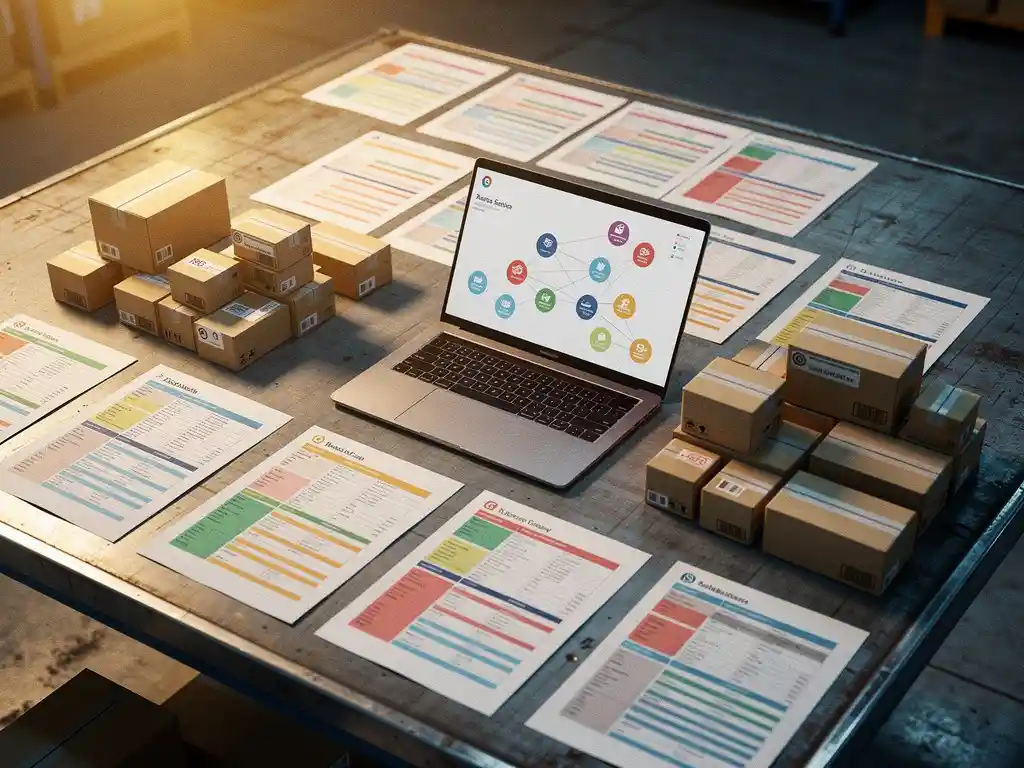
Groupage transport sits at the intersection of efficiency and complexity. Combining multiple smaller shipments from different customers into a single vehicle load sounds straightforward in theory, but in practice it demands constant coordination, rapid decision-making, and an almost impossible awareness of ever-changing conditions. For transport planners managing dozens of orders at once, the pressure is real, and the margin for error is slim.
AI is changing how planners approach this challenge. Rather than replacing the experienced professionals who understand the nuances of their routes and customers, AI tools now work alongside planners to handle the repetitive, data-heavy work that consumes so much of their day. This article answers the most important questions about how AI improves groupage transport planning and what that means in practice.
What is groupage transport, and why is planning it so complex?
Groupage transport is a logistics model in which shipments from multiple senders are consolidated into a single vehicle load, with each consignment occupying only part of the available space. This model reduces the cost per shipment and improves vehicle utilization, but planning it is inherently complex because every load is a puzzle with moving pieces, tight constraints, and no two days that look the same.
The complexity comes from several directions at once. A planner must match shipments by destination proximity, weight, volume, delivery window, and special handling requirements, all while accounting for driver availability, vehicle capacity, and carrier contracts. Add to that the constant flow of new orders, cancellations, and last-minute changes, and it becomes clear why groupage planning is one of the most demanding tasks in transport operations.
What are the biggest challenges in traditional groupage planning?
The biggest challenges in traditional groupage planning are information overload, slow reaction to change, and the manual effort required to bundle shipments effectively. Planners working with spreadsheets or basic transport management systems spend significant time on tasks that could be handled automatically, leaving less time for judgment-driven decisions that genuinely require human expertise.
Traditional planning tools are largely static. They generate a plan based on the data available at that moment, but they cannot adapt dynamically when a shipment is canceled, a delivery window shifts, or a carrier becomes unavailable. By the time the plan is executed, conditions may have already changed. This gap between plan and reality is where inefficiency builds up, leading to empty kilometers, missed windows, and unnecessary costs.
Manual bundling of shipments is time-consuming and error-prone
Static planning tools cannot respond to real-time disruptions
Information is spread across multiple systems, creating blind spots
Repetitive tasks crowd out strategic, experience-based decisions
How does AI improve groupage transport planning?
AI improves groupage transport planning by continuously analyzing live order data, carrier constraints, and route parameters to cluster shipments into optimized groups in real time. Unlike rule-based systems, AI adapts dynamically as conditions change, so the plan always reflects the actual state of your operation rather than a snapshot from hours ago.
Where a traditional system applies fixed rules to bundle shipments, an AI-powered approach reasons through the problem the way an experienced planner would, but at a speed and scale no individual can match. It identifies which shipments belong together based on destination, timing, and load compatibility, then validates those groupings against carrier availability and contractual rates before presenting a consolidated plan. When a cancellation arrives, the system detects the impact, evaluates alternatives, and generates a revised allocation without the planner having to start from scratch.
Importantly, AI does not make these decisions in isolation. It surfaces recommendations and flags exceptions, keeping the planner informed and in control. The goal is not to automate judgment out of the process but to free planners from the data-heavy groundwork so they can focus on the decisions that genuinely benefit from their experience and knowledge of the business. A dedicated planning assistant built on this principle can make that shift tangible from day one.
What’s the difference between AI planning and traditional transport software?
The key difference between AI planning and traditional transport software is adaptability. Traditional software follows predefined rules and produces a static output based on the data available at the time of calculation. AI planning continuously reasons over live data, learns from patterns, and adjusts its outputs as conditions evolve, making it far better suited to the unpredictable reality of groupage operations.
Traditional transport management systems are valuable tools, but they were designed to organize and record information rather than to reason through complex, dynamic problems. They struggle when the real world deviates from the plan, which in groupage transport happens constantly. AI planning layers intelligent orchestration on top of existing systems, bridging the gap between structured optimization logic and the messy, ever-changing conditions of daily logistics operations.
Another important distinction is learning. AI systems improve over time by recognizing patterns in planning decisions, remembering exceptions, and adapting to the preferences of individual planners. A traditional system applies the same rules on day one as it does on day one thousand. An AI assistant becomes more useful the longer it works alongside the team.
What tasks can AI handle automatically in groupage planning?
AI can automatically handle shipment consolidation, carrier matching, route clustering, exception detection, and replanning after disruptions in groupage transport. These are the tasks that consume the most time in a planner’s day without necessarily requiring the kind of contextual judgment that experienced planners provide.
In practical terms, this means the AI monitors incoming orders across channels, groups them into optimized loads based on destination and constraints, checks carrier options against contract rates and performance history, and flags anything that needs human review. A coordination assistant operating across these workflows ensures that when something changes mid-day, the system responds immediately rather than waiting for the next planning cycle.
Automatic grouping of shipments into optimized load plans
Real-time monitoring of order changes and cancellations
Carrier selection based on live availability and contract terms
Escalation of exceptions that require planner input
What AI does not do is replace the planner’s judgment on edge cases, customer relationships, or situations that fall outside established patterns. It handles the volume so the planner can focus on the value.
How do you get started with AI for groupage transport planning?
Getting started with AI for groupage transport planning is simpler than most planners expect. The key is choosing a solution that works alongside your existing tools rather than requiring a full system migration. A well-designed AI assistant integrates into your current workflow from day one, with no disruption to ongoing operations.
The most important step is selecting a tool built around real planning logic rather than generic automation frameworks. Planners should look for a solution that learns from their specific decisions, adapts to their preferences, and supports rather than overrides their expertise. Onboarding should be fast, and the planner should feel in control throughout.
How LogicPlan helps with groupage transport planning
Our Groupage Planning Automation service is designed specifically to solve the challenges described throughout this article. It uses intelligent AI agents to analyze live order data, group shipments into optimized loads in real time, and adapt instantly when conditions change. The result is a significant reduction in planning time and empty kilometers, with every groupage decision reflecting the actual state of your operation.
What makes our approach different is that it is built around the planner, not around replacing them. LogicPlan learns your individual planning patterns, remembers exceptions, and improves over time alongside you. It works via a browser extension that sits on top of your existing TMS, so there is no migration required, and you can be operational within minutes of installation. It handles the data-heavy groundwork so you can focus on the decisions that matter.
If you are ready to see how LogicPlan can reduce your groupage planning time and improve the quality of your load plans, get in touch with our team for a demonstration tailored to your operation.
Frequently Asked Questions
How long does it typically take to see measurable results after implementing AI in groupage planning?
Most operations begin to see measurable improvements within the first few weeks of deployment, particularly in planning time and load utilization rates. Because AI tools like LogicPlan integrate directly into your existing TMS without requiring a migration, there is no lengthy setup phase eating into your ROI. The more data the system processes, the sharper its recommendations become, so results tend to compound over the first few months as the AI learns your specific routes, carriers, and planning preferences.
What happens when the AI makes a recommendation I disagree with as a planner?
AI planning tools are designed to support your judgment, not override it. You can review, adjust, or reject any recommendation the system surfaces, and a well-built AI assistant will actually learn from those corrections over time, refining its future suggestions to better reflect your preferences and expertise. Think of it less as an automated decision-maker and more as a highly informed colleague who prepares the groundwork and flags options, while you retain full authority over what gets executed.
Will AI planning work for our operation if we have highly irregular or seasonal shipment volumes?
AI planning is actually particularly well-suited to irregular and seasonal operations because it reasons over live data rather than relying on fixed rules or historical averages. During peak periods, it scales to handle increased order volumes without requiring additional planning headcount, and during quieter periods it continues optimizing load efficiency even when shipment patterns shift significantly. The key is choosing a solution that adapts dynamically rather than one calibrated to a single expected volume profile.
How does AI handle situations where carrier availability or shipment details change at the last minute?
This is one of the areas where AI planning delivers the most immediate value. When a last-minute change arrives, such as a carrier becoming unavailable or a delivery window shifting, the system detects the impact on the existing plan, evaluates available alternatives against your carrier contracts and route constraints, and generates a revised allocation in real time. Rather than a planner having to manually unpick and rebuild part of the plan mid-day, the AI presents a ready-to-review solution, dramatically reducing both reaction time and the risk of missed windows.
Do we need to share sensitive shipment or customer data with a third-party AI system?
This is a legitimate concern and one worth raising directly with any vendor during evaluation. Reputable AI planning solutions are built with data security and privacy compliance as core requirements, typically processing your data within controlled, encrypted environments and adhering to relevant regulations such as GDPR. Before committing to any tool, ask specifically about data residency, access controls, and how your operational data is used in model training, as policies vary meaningfully between providers.
What is the biggest mistake companies make when adopting AI for transport planning?
The most common mistake is treating AI adoption as a technology project rather than an operational one, focusing heavily on the tool itself while underinvesting in planner onboarding and change management. AI planning tools deliver the most value when experienced planners actively engage with the recommendations, provide feedback, and use the time savings to focus on higher-value decisions rather than simply monitoring the automation. Choosing a solution that is genuinely intuitive for planners to use day-to-day, rather than one that requires significant technical expertise to operate, makes this transition considerably smoother.
Can AI planning tools integrate with the TMS or ERP systems we already use, or does it require replacing them?
The best AI planning tools are designed to complement and extend your existing systems rather than replace them. Solutions like LogicPlan operate as a layer on top of your current TMS via a browser extension, meaning your existing workflows, data structures, and integrations remain intact. This approach eliminates the cost, risk, and disruption of a full system migration and allows your team to become operational almost immediately, with the AI handling the intelligent orchestration that your current tools were not built to provide.
Next blog