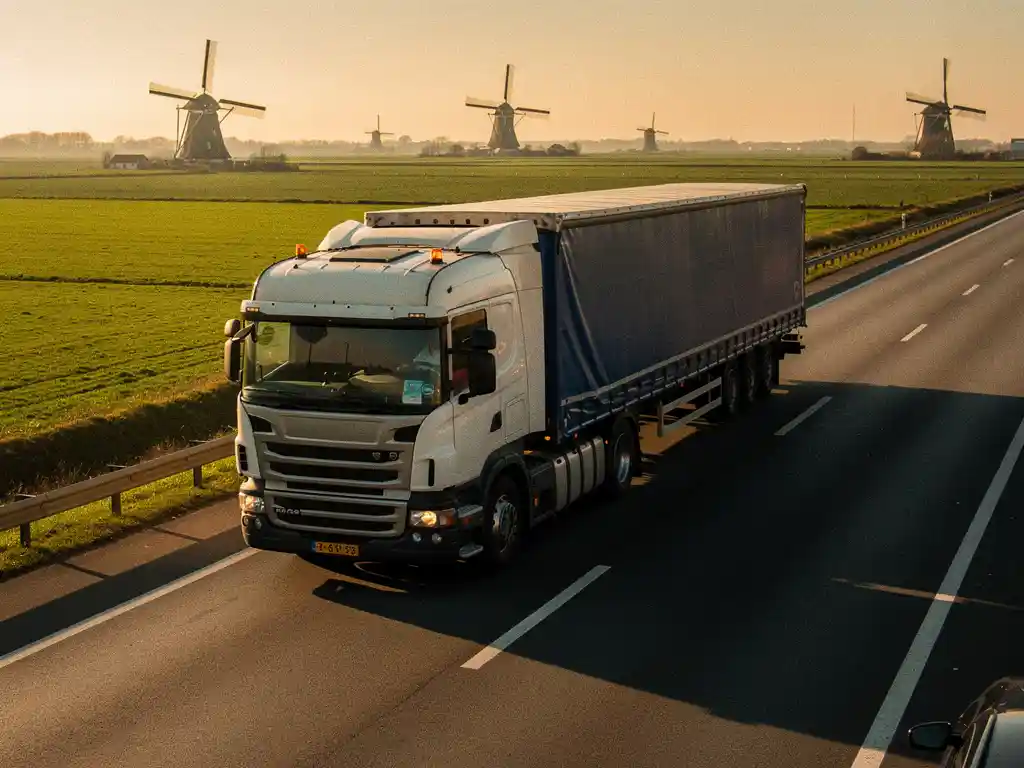
Empty truck kilometers are one of the most persistent and costly inefficiencies in road freight. Every kilometer a truck travels without cargo represents wasted fuel, driver time, and operational budget — and in today’s competitive logistics environment, those losses add up fast. For transport planners juggling dozens of orders, carriers, and real-time disruptions, reducing those empty runs manually is nearly impossible. That is where groupage automation changes the game.
What are empty truck kilometers and why do they cost so much?
Empty truck kilometers, often called “deadhead miles” in freight terminology, refer to the distance a vehicle travels without carrying any cargo. This happens when a truck delivers a load and then drives back to its base or next pickup point without a return shipment, or when poor load consolidation leaves vehicles running partially filled on routes that could have been combined.
The financial and environmental impact is significant. Fuel consumption does not drop to zero when a truck runs empty — engines, tires, and wear-and-tear costs continue regardless of whether there is freight on board. For carriers operating on thin margins, empty kilometers directly erode profitability. For shippers, they translate into higher transport costs passed on through carrier pricing. And from a sustainability standpoint, every unnecessary kilometer contributes to CO2 emissions that the transport sector is under growing pressure to reduce.
What is groupage automation and how does it work?
Groupage, also known as LTL (Less Than Truckload) consolidation, is the practice of combining multiple smaller shipments from different customers or origins into a single truckload. When done well, groupage means fewer trucks on the road, fuller loads, and shorter routes. When done manually, it is a time-consuming puzzle that planners often solve under pressure with incomplete information.
Groupage automation replaces that manual puzzle-solving with intelligent AI orchestration. Our AI planning assistant analyzes live order data, carrier constraints, delivery windows, and route parameters simultaneously — clustering shipments into optimized load groups in real time. Instead of relying on fixed rules that cannot adapt when conditions change, the system continuously evaluates what the best grouping looks like given the current state of your operation.
Importantly, this is not about removing the planner from the equation. Groupage automation works alongside your existing judgment, handling the repetitive data-heavy analysis so you can focus on the decisions that genuinely require human expertise.
How does groupage automation reduce empty truck kilometers?
The connection between smarter groupage and fewer empty kilometers is direct. When shipments are intelligently consolidated, trucks depart fuller, routes become more efficient, and the need for additional vehicles on partially loaded runs decreases. Here is how the logic plays out in practice:
AI agents identify shipments that share compatible routes, delivery windows, and weight or volume profiles — consolidating what would have been separate FTL and LTL runs into single optimized loads
Real-time re-evaluation means that when a cancellation or new order arrives, the system immediately recalculates groupings rather than leaving gaps that turn into empty kilometers
Carrier and route matching reduces repositioning trips, because the system accounts for where vehicles already are when assigning new loads
Historical performance data helps the system learn which groupings consistently work, reducing trial-and-error that leads to inefficient routes
The result is that trucks move more cargo per kilometer driven, which is the most straightforward way to push empty kilometer rates down without adding vehicles or drivers to your fleet.
What types of transport operations benefit most from groupage automation?
While any operation running LTL or mixed FTL and LTL freight can benefit, certain scenarios see the sharpest reductions in empty kilometers. Regional distribution networks with high order frequency are a natural fit, because the volume of shipments creates more opportunities for intelligent consolidation. Cross-border groupage operations also benefit significantly, since the complexity of coordinating multiple carriers, customs requirements, and delivery windows makes manual groupage particularly error-prone.
Operations that experience high day-to-day variability — seasonal peaks, frequent last-minute orders, or regular cancellations — gain the most from automation that adapts in real time rather than relying on a plan built the night before that may already be outdated by morning.
How does groupage automation compare to traditional transport planning software?
Traditional transport management systems are built around structured rules and static optimization models. They are excellent at executing a plan once that plan is defined, but they struggle when reality diverges from the plan — which in logistics happens constantly. A conventional TMS might calculate an optimal groupage solution based on the orders available at planning time, but it cannot dynamically re-consolidate when a new shipment arrives two hours later or when a carrier confirms late availability.
Our approach works differently. Rather than replacing your existing TMS, our solution runs alongside it via a browser extension — no migration, no disruption to your current setup. The AI layer adds adaptive intelligence on top of your existing tools, handling the real-time complexity that static software cannot address. This means planners get the benefits of intelligent groupage automation without the risk and cost of a full system overhaul.
Our coordination assistant also monitors live operations alongside planning, so the same intelligence that optimizes your groupage decisions continues working after the plan is in motion.
How can transport planners start reducing empty kilometers with automation?
The practical starting point is simpler than most planners expect. Because our solution installs as a browser extension and works with your existing systems, you can be operational within minutes of installation. There is no lengthy implementation project, no data migration, and no need to rebuild your planning workflows from scratch.
From day one, the system begins learning your planning patterns — the routes you favor, the carriers you trust, the exceptions you handle manually. Over time, it adapts to reflect your individual logic, which means the groupage suggestions it surfaces become increasingly aligned with how you actually think about your operation. It learns with you, not instead of you.
How LogicPlan helps reduce empty kilometers through groupage automation
LogicPlan’s Groupage Planning Automation is built specifically for transport planners who need intelligent consolidation without losing control of their operation. It is not a replacement for your expertise — it is a tool that amplifies it. Here is what it delivers in practice:
Real-time AI groupage that clusters shipments based on live order data, carrier availability, and route parameters
Adaptive intelligence that learns your planning logic and improves with every decision you make together
Non-disruptive deployment via browser extension — works with your existing TMS from day one
Proactive re-grouping when cancellations, new orders, or carrier changes arrive mid-day
If reducing empty kilometers, cutting fuel costs, and spending less time on manual consolidation sounds like the right direction for your operation, LogicPlan is ready to show you how it works in your specific context. Get in touch with LogicPlan and let us walk you through what groupage automation looks like for your routes, your carriers, and your planning team.
Frequently Asked Questions
How much can groupage automation realistically reduce empty truck kilometers?
While results vary depending on your operation's size, freight mix, and current planning maturity, transport operations that switch from manual groupage to AI-driven consolidation typically see meaningful reductions in empty kilometer rates — often in the range of 15–30% depending on route density and order variability. The gains are highest in operations with high order frequency and significant day-to-day variability, where manual planning leaves the most consolidation opportunities on the table. The best way to estimate your specific potential is to map your current empty kilometer rate against your LTL volume and average load factor.
What data does the system need to start generating groupage suggestions?
LogicPlan works with the order and carrier data already available in your existing TMS or planning tools — there is no need to build a new data infrastructure or manually feed the system. At a minimum, it uses live order data including origins, destinations, delivery windows, and weight or volume profiles, alongside carrier availability and route parameters. Because it installs as a browser extension on top of your current setup, it reads the context you are already working with rather than requiring a separate data pipeline.
What if my operation has highly irregular or unpredictable freight volumes — will automation still work?
Irregular and unpredictable volumes are actually one of the scenarios where groupage automation delivers the most value. Static planning tools struggle precisely because they build a plan at a fixed point in time, which quickly becomes outdated when volumes spike, orders cancel, or new shipments arrive late in the day. AI-driven groupage continuously re-evaluates consolidation opportunities as conditions change, meaning it adapts to irregularity rather than being undermined by it. Seasonal peaks, last-minute orders, and frequent cancellations are handled as part of normal operation rather than as exceptions that break the plan.
How does groupage automation handle carrier-specific constraints like weight limits, equipment types, or preferred lanes?
Carrier constraints are factored into the groupage logic from the start — the system does not suggest consolidations that violate weight or volume limits, equipment requirements, or carrier lane preferences. As the system learns your planning patterns over time, it also picks up on the softer preferences you apply in practice, such as which carriers you trust for specific routes or which groupings you consistently approve or override. This means suggestions become progressively more aligned with your real-world constraints, not just the technical ones.
Can groupage automation help with compliance and sustainability reporting on empty kilometers?
Yes — because the system tracks groupage decisions, load factors, and route outcomes in real time, it generates a data trail that supports both internal performance reporting and external sustainability reporting. For transport operations under pressure to reduce CO2 emissions or report on freight efficiency metrics, having accurate, automated data on empty kilometer rates and load utilization is a significant operational advantage. This removes the need to manually reconstruct performance data after the fact.
What is the biggest mistake transport planners make when trying to reduce empty kilometers without automation?
The most common mistake is relying on fixed groupage rules — for example, always combining shipments on the same corridor regardless of timing or load compatibility — rather than evaluating each day's opportunities dynamically. Fixed rules work well in stable, predictable conditions, but they leave consolidation opportunities missed when order patterns shift. Planners also frequently underestimate how much empty kilometer reduction is lost not at planning time, but mid-day when new orders or cancellations arrive and there is no practical way to manually re-consolidate an already-dispatched plan.
Is groupage automation suitable for smaller transport operations, or is it mainly for large fleets?
Groupage automation is relevant at any scale where LTL consolidation decisions are being made — it is not a tool reserved for large fleets. In fact, smaller operations often benefit disproportionately because they have less planning resource available to manually evaluate consolidation options across every order. A planner managing 20–30 shipments per day with a small carrier network can recover significant efficiency through smarter groupage, and the non-disruptive browser extension deployment means there is no minimum fleet size or infrastructure requirement to get started.
Next blog