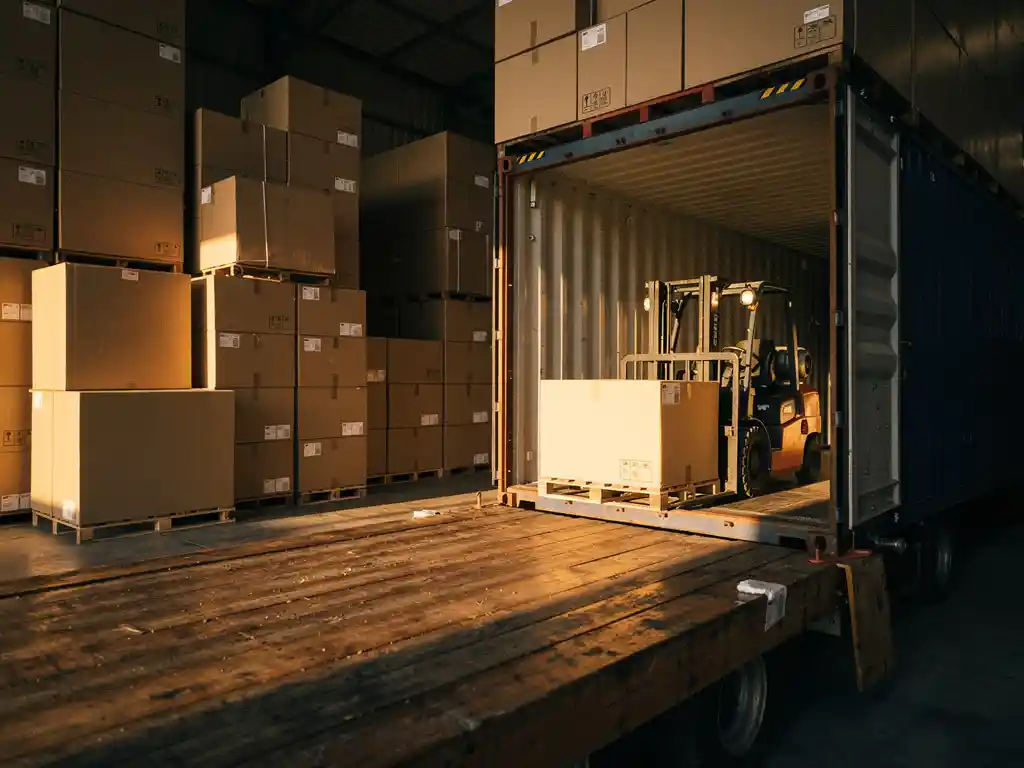
Groupage transport is one of the most practical and cost-efficient shipping methods available to businesses that regularly move smaller volumes of freight. Rather than booking an entire truck for a partial load, shippers share trailer space with other consignments heading in the same direction—splitting costs without sacrificing reliability. For transport planners managing multiple orders across different customers and lanes, understanding how groupage works is essential for making smart, efficient decisions every day.
This guide answers the most common questions about groupage transport clearly and directly—from the basics of how it works to the practical challenges planners face when coordinating consolidated shipments.
What is groupage transport and how does it work?
Groupage transport is a shipping method in which multiple smaller consignments from different shippers are consolidated into a single truck or trailer. Each shipment occupies only the space it needs, and the total transport cost is divided among all senders based on weight, volume, or a combination of both. A carrier or freight forwarder acts as the consolidator, collecting individual loads and grouping them into one efficient run.
In practice, the process typically works like this: a carrier collects shipments from several pickup points, brings them to a consolidation hub, and then loads them onto a single vehicle headed toward a shared destination region. At a distribution hub on the receiving end, the consolidated load is broken down, and individual consignments are delivered to their final addresses. This hub-and-spoke model is what makes groupage transport both scalable and cost-effective for shippers who don’t have enough freight to fill a full truck on their own.
What types of cargo are suitable for groupage transport?
Groupage transport is best suited for cargo that is too large for parcel services but too small to justify a full truckload. Typical groupage shipments range from one to roughly fifteen pallets, covering goods such as packaged industrial components, consumer goods, building materials, and non-perishable food products. The key requirement is that the freight can be safely consolidated with other loads without special handling conflicts.
Some cargo types are less compatible with groupage. Hazardous materials, temperature-sensitive goods, and oversized or irregularly shaped loads often require dedicated transport or specific co-loading restrictions. That said, many carriers do offer specialist groupage services for refrigerated or ADR-classified freight—it simply requires more careful planning and matching with compatible co-loads.
What’s the difference between groupage transport and full truckload shipping?
The core difference is capacity and exclusivity. Full truckload (FTL) shipping means one shipper books the entire trailer for their goods alone—offering faster transit times, fewer handling points, and a lower risk of damage. Groupage transport shares that trailer space across multiple shippers, which reduces cost per shipment but typically adds transit time due to consolidation and distribution stops along the route.
Choosing between the two comes down to shipment size and urgency. FTL makes sense when you have enough volume to fill a truck, when goods are fragile or high-value, or when delivery speed is critical. Groupage is the smarter choice when you’re moving smaller volumes regularly and want to control freight costs without sacrificing a reliable service level. Many shippers use both models depending on the lane, season, or customer requirement.
How are groupage transport rates calculated?
Groupage rates are typically calculated based on the greater of actual weight or volumetric (dimensional) weight, often expressed as a price per 100 kg or per loading meter. Carriers use loading meters as a standard unit to measure how much trailer floor space a shipment occupies, regardless of height. Surcharges for fuel, tolls, peak season, and remote delivery zones are then added on top of the base rate.
Because multiple shippers share the same vehicle, the rate structure reflects only your share of the total capacity used. This makes groupage pricing more complex than FTL, where you simply pay for the whole truck. When comparing quotes, planners should always check whether the rate includes collection, hub handling, and final delivery—or whether those are billed separately as additional services.
What are the main challenges of groupage transport?
Groupage transport introduces complexity that full truckload shipping avoids. The most common challenges planners encounter include:
Longer and less predictable transit times due to multiple collection and delivery stops
Higher damage risk from additional handling at consolidation hubs
Coordination complexity when managing many small shipments across different carriers and lanes simultaneously
Exception management—a single delayed pickup can affect the entire consolidated load
For transport planners specifically, the challenge is not just operational—it’s informational. Keeping track of which shipments are grouped together, which carrier has which load, and what the current status is across dozens of active groupage movements creates real information overload. When something changes mid-route, the ripple effects across co-loaded shipments need to be identified and acted on quickly. A coordination assistant can help planners stay on top of these moving parts by surfacing the right information at the right time.
How can transport planners optimise groupage shipments?
Optimising groupage shipments starts with smarter consolidation decisions: grouping orders by compatible delivery windows, geographic proximity, and load compatibility before assigning them to a carrier. Planners who work proactively—building groups based on live order data rather than reacting to what arrives—consistently achieve better load fill rates and fewer last-minute changes.
Beyond the initial grouping, real-time visibility is critical. Knowing when a shipment is delayed, when a carrier substitution is needed, or when a customer has changed their delivery window allows planners to adjust the consolidated load before it causes wider disruption. Tools like a planning assistant can support this process by analysing live order data and helping planners make faster, better-informed consolidation decisions. The planners who manage groupage most effectively combine structured planning logic with the flexibility to adapt quickly when conditions change.
How LogicPlan helps with groupage transport planning
Groupage transport is inherently complex—and that complexity multiplies quickly when you’re managing dozens of consolidations across multiple carriers and lanes at once. Our Groupage Planning Automation service is built specifically to take the heavy lifting out of that process, without taking the planner out of the equation.
Using AI agents driven by large language models, LogicPlan analyzes live order data, carrier constraints, and route parameters to cluster shipments into optimized groups in real time. Rather than replacing your planning judgment, it works alongside you—learning your patterns, remembering exceptions, and improving with every decision you make together. Key capabilities include:
Automated consolidation of orders into efficient load plans based on live conditions
Real-time monitoring that flags exceptions before they escalate
Seamless integration with your existing TMS via a browser extension—no migration required
Fast onboarding so you’re operational within minutes of installation
LogicPlan is not a replacement for experienced transport planners—it’s a tool built around the way planners actually think and work. If groupage planning is taking up more time than it should, we’d love to show you what smarter consolidation looks like in practice. Get in touch with LogicPlan today and see how our AI assistant can make your groupage operations faster, leaner, and more reliable.
Frequently Asked Questions
How do I know whether a shipment is better suited for groupage or a dedicated full truckload?
A useful rule of thumb is to consider groupage when your shipment occupies fewer than roughly six to eight loading meters and delivery speed is not critical. If your freight is time-sensitive, fragile, high-value, or regularly fills more than half a trailer, the cost premium of FTL is usually justified. Many experienced planners run a quick comparison on cost-per-loading-meter alongside lead time requirements before committing to either option.
What's the best way to get started with groupage transport if my business hasn't used it before?
Start by auditing your outbound shipments over the past three to six months and identifying orders that were sent as partial FTL loads—those are your strongest candidates for consolidation. Approach two or three established freight forwarders or groupage carriers that cover your key lanes and request rate cards based on loading meters and weight bands. Running a small pilot on a single lane before rolling out more broadly lets you validate transit times and service quality with minimal risk.
How can I reduce the risk of cargo damage in groupage transport?
Proper packaging is your first and most important line of defence—goods in groupage shipments are handled multiple times at consolidation hubs, so robust palletisation, stretch wrapping, and clear labelling are essential. Communicating any special handling requirements to the carrier before booking (fragile, top-load only, etc.) ensures those instructions travel with the shipment. It's also worth reviewing your carrier's hub handling procedures and checking whether their liability terms cover consolidation-related damage, as policies vary significantly.
What should I do when a groupage shipment is delayed mid-route?
The first step is to determine whether the delay affects only your consignment or the entire consolidated load, as that changes the urgency and your options. Contact your carrier or freight forwarder immediately to understand the cause and revised ETA, then proactively notify any downstream customers whose delivery windows may be impacted. If the delay is significant, ask the carrier whether your consignment can be transferred to an alternative vehicle or service departing sooner—many operators can accommodate this, especially at major hubs.
Are there common mistakes transport planners make when managing groupage shipments?
One of the most frequent mistakes is building consolidation groups too early based on static order data, only to have delivery windows or volumes change before collection—leading to last-minute replanning. Another is underestimating the cumulative impact of small exceptions: a single missed pickup or address change can disrupt the timing of an entire consolidated run. Planners also sometimes overlook load compatibility checks, inadvertently grouping shipments with conflicting requirements such as temperature zones or ADR classifications.
How does volumetric weight work in groupage pricing, and how can I avoid unexpected charges?
Volumetric (dimensional) weight converts the physical space your shipment occupies into a theoretical weight, typically calculated as length × width × height (in metres) divided by a carrier-specific factor—commonly 333 kg per loading meter in European road freight. If your cargo is bulky but light, you'll be charged on volumetric weight rather than actual weight, which can catch shippers off guard. To avoid surprises, always measure and declare your shipment dimensions accurately when requesting quotes, and ask carriers upfront which calculation method and divisor they apply.
Can groupage transport work for cross-border or international shipments?
Yes—international groupage is widely used across Europe and beyond, with many freight forwarders operating regular consolidated services between major trade lanes. The key difference from domestic groupage is the addition of customs documentation requirements, which means every consignment in the consolidated load must have complete and accurate paperwork to avoid holding up the entire vehicle at a border crossing. Working with a forwarder experienced in cross-border groupage, and ensuring your commercial invoices, packing lists, and any required permits are prepared well in advance, significantly reduces the risk of customs-related delays.
Next blog