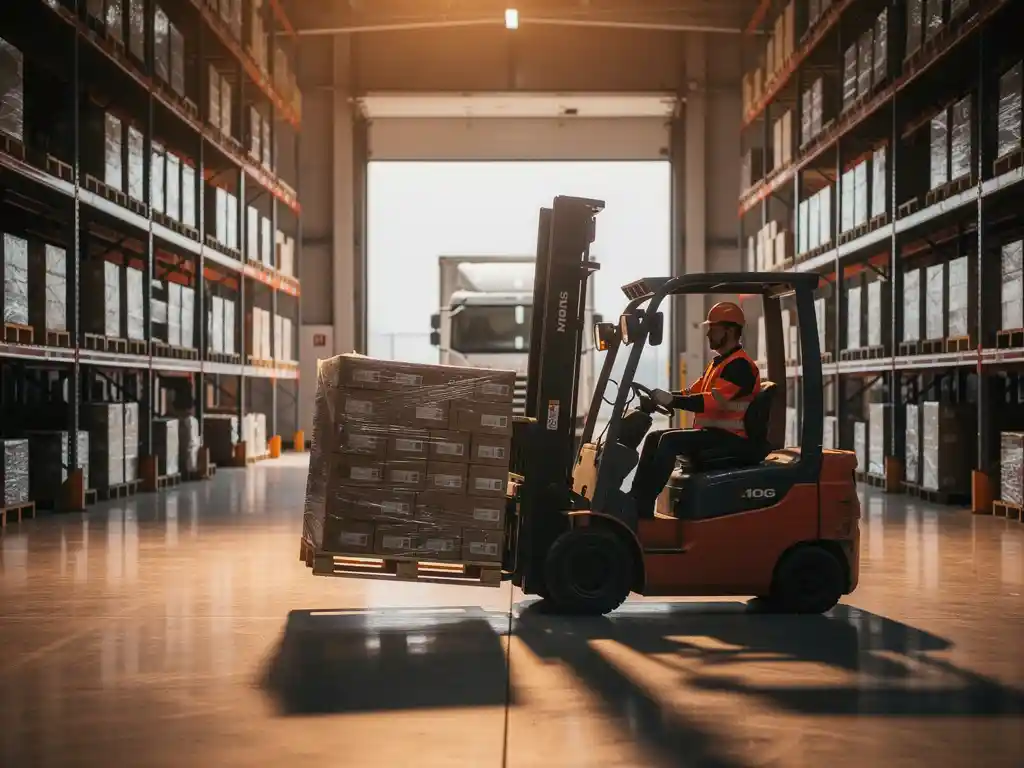
Groupage transport depends on timing, coordination, and precision. When multiple shipments from different customers share a single vehicle, every decision about what goes where and when matters enormously. Yet one of the most overlooked sources of planning friction sits just behind the loading dock: the warehouse itself.
Poor visibility between warehouse operations and transport planning creates delays, missed consolidation opportunities, and inefficient routes that cost time and money. Understanding how warehouse integration improves groupage transport is one of the most practical steps a transport planner can take toward smoother, smarter operations.
What is warehouse integration in groupage transport?
Warehouse integration in groupage transport is the real-time connection between warehouse management systems (WMS) and transport planning processes, allowing planners to access live data on stock availability, order readiness, loading dock status, and shipment dimensions before building consolidated load plans.
Without this connection, transport planning and warehouse operations run in separate silos. Planners work from order lists that may not reflect actual picking progress, confirmed weights, or pallet configurations. With integration in place, the planning layer sees what the warehouse sees in real time, enabling decisions that reflect actual operational conditions rather than assumptions.
In groupage specifically, where shipments from multiple customers must be bundled into a single efficient load, this live visibility is not a luxury. It is the foundation of accurate consolidation.
Why does poor warehouse visibility cause groupage planning problems?
Poor warehouse visibility causes groupage planning problems because planners are forced to make consolidation decisions based on incomplete or outdated information. When order readiness, actual weights, or pallet dimensions are unknown at planning time, load plans are built on estimates that frequently prove wrong at the dock.
The consequences ripple outward quickly. A shipment that was expected to be ready at 08:00 is delayed in picking, forcing a last-minute reshuffle of the entire consolidated load. A pallet that was listed as 400 kg turns out to be 520 kg, throwing off the weight balance of a carefully planned vehicle. These are not edge cases. They are the daily reality of groupage planning without warehouse integration.
Beyond individual errors, poor visibility creates a compounding problem: planners spend significant time chasing status updates, calling warehouse supervisors, and manually cross-referencing systems. That time comes directly out of the hours available for actual planning.
How does warehouse integration improve load consolidation decisions?
Warehouse integration improves load consolidation decisions by giving planners accurate, real-time data on order status, physical dimensions, and availability windows, allowing shipments to be grouped based on facts rather than forecasts.
Effective consolidation requires matching shipments not just by destination or route, but also by readiness timing, physical compatibility, and handling requirements. A fragile pallet should not be consolidated with a heavy industrial shipment. Two orders bound for the same region but with a four-hour readiness gap may not belong on the same vehicle. Without warehouse data, planners cannot reliably make these calls.
With integration, the planning layer can dynamically adjust groupings as warehouse status updates arrive. If one order is flagged as delayed, the system can immediately assess whether the remaining shipments still form a viable consolidated load or whether reallocation is needed. This responsiveness is what separates reactive groupage planning from genuinely optimised operations.
What data does a transport planner need from the warehouse?
A transport planner needs four core types of warehouse data to make reliable groupage decisions: order readiness status, confirmed weight and dimensions, special handling requirements, and dock availability or loading-slot timing.
Order readiness status: Is the shipment picked, packed, and staged for loading?
Confirmed weight and dimensions: Actual figures, not estimates from the order entry system.
Special handling flags: Temperature control, fragile goods, hazardous materials.
Loading-slot availability: When can the dock physically accommodate the vehicle?
Beyond these essentials, experienced planners also benefit from historical performance data from the warehouse: how reliably does a particular product line meet its promised readiness time? Are there recurring delays for certain order types? This pattern-level insight helps planners build more realistic consolidation windows rather than optimistic ones that fall apart under normal operational pressure.
How does AI use warehouse data to optimise groupage routes?
AI uses warehouse data to optimise groupage routes by continuously processing live inputs on order readiness, load configurations, and timing constraints, then dynamically adjusting route and consolidation plans to reflect current conditions rather than the snapshot that existed when planning began.
Traditional route optimisation tools work with fixed inputs. You define the orders, the weights, the destinations, and the solver produces a plan. But in groupage transport, the inputs keep changing. Orders get added, delayed, or cancelled. Warehouse readiness shifts. An AI system connected to live warehouse data can respond to these changes as they happen, recalculating consolidation groups and route sequences without requiring the planner to restart the entire planning process.
This is where the real value of AI-powered groupage planning becomes clear. Rather than producing a single static plan at the start of the day, an AI agent monitors the evolving state of both warehouse and transport operations, flags conflicts, and suggests revised groupings that keep the operation moving efficiently. The planner remains in control of every decision, but the cognitive load of tracking dozens of moving variables shifts to the system.
What are the biggest mistakes in warehouse-transport integration?
The biggest mistakes in warehouse-transport integration are treating it as a one-time technical project rather than an ongoing operational process, relying on batch data transfers instead of real-time feeds, and failing to align the data fields that warehouse and transport teams actually use in practice.
A common error is connecting systems at a surface level, passing order data between the WMS and TMS without agreeing on what “ready” actually means in each context. The warehouse may mark an order as picked while it is still awaiting a quality check. The transport planner sees “ready” and schedules the vehicle. The mismatch only surfaces at the dock, too late to adjust without cost.
Another frequent mistake is underestimating the human side of integration. Systems can be connected technically while the teams using them continue to operate in silos, defaulting to phone calls and manual overrides rather than trusting the shared data layer. Successful integration requires both technical alignment and a shared operational understanding between warehouse and transport teams.
How LogicPlan helps with groupage transport planning
LogicPlan’s Groupage Planning Automation service directly addresses the challenges described throughout this article. Our AI agents connect to live order and warehouse data, analyse carrier constraints and route parameters, and automatically cluster shipments into efficient consolidated load plans in real time. When conditions change, the system adapts immediately, without requiring the planner to start over.
What makes our approach different is that it is built around the planner, not around replacing them. LogicPlan learns your planning patterns, remembers your exceptions, and improves alongside you over time. The AI handles the data-heavy, repetitive coordination work so you can focus on the decisions that genuinely require your judgment.
No migration required: Works alongside your existing TMS via a browser extension, operational within minutes.
Adaptive intelligence: Learns individual planning patterns and improves with every session.
Real-time responsiveness: Adjusts groupage plans dynamically as warehouse and transport conditions evolve.
Planner-centric design: Built around real planning logic, not generic automation frameworks.
If you want to see how LogicPlan can reduce your groupage planning time and improve load consolidation decisions, get in touch with us today to discover what AI-assisted planning looks like in practice.
Frequently Asked Questions
How long does it typically take to integrate a WMS with a transport planning system?
The timeline varies depending on the systems involved and the depth of integration required, but modern AI-assisted tools like LogicPlan are designed to work alongside your existing TMS via a browser extension, meaning basic operational connectivity can be achieved within minutes rather than months. A full, reliable integration — where data fields are properly mapped, status definitions are agreed upon between teams, and real-time feeds replace batch transfers — typically takes a few weeks of configuration and testing. The key is not rushing the alignment phase, as mismatched definitions (such as what 'ready' means in the WMS versus the TMS) are the most common source of post-integration problems.
What if our warehouse doesn't use a WMS — can we still improve groupage planning?
Yes, meaningful improvements are still possible even without a formal WMS in place. Start by establishing structured, real-time communication channels between warehouse supervisors and transport planners — even a shared digital status board or a simple spreadsheet updated at regular intervals is significantly better than phone calls and assumptions. As a next step, consider lightweight warehouse tracking tools that capture order readiness and dock slot availability without requiring a full WMS implementation. The goal is to reduce the information gap; the tool used to close it matters less than the discipline of keeping that data current and accessible to planners.
How do we handle situations where warehouse data is frequently inaccurate or unreliable?
Inaccurate warehouse data is usually a process problem before it is a technology problem — it signals that the people updating statuses lack the time, tools, or incentive to keep records current. The first step is identifying which data points are most unreliable (typically readiness times and actual weights) and focusing improvement efforts there rather than trying to fix everything at once. Building in a short buffer between the warehouse's stated readiness time and the planned loading slot can absorb minor inaccuracies while you work on the root cause. Over time, AI systems that track historical warehouse performance can help planners calibrate how much to trust specific product lines or order types, turning pattern data into a practical planning adjustment.
Can warehouse integration help reduce empty or underloaded vehicles in groupage operations?
Absolutely — this is one of the most direct financial benefits of warehouse integration. When planners have real-time visibility into confirmed shipment dimensions, weights, and readiness windows, they can identify consolidation opportunities that would otherwise be missed due to timing uncertainty or incomplete data. An order that was previously left off a load because its readiness was unclear can be confidently added when the warehouse confirms it is staged and ready. Over time, consistently accurate load data also allows AI systems to identify patterns in underutilisation and suggest structural changes to consolidation windows or collection schedules.
What's the best way to get warehouse and transport teams aligned on shared data standards?
Start with a joint session between warehouse supervisors and transport planners to map out exactly what each team needs from the other and where the current data handoffs break down. The most important output of this session is a shared definition of key status terms — particularly what 'picked,' 'packed,' 'staged,' and 'ready for loading' mean in practice, not just in the system. Document these definitions, build them into your WMS configuration, and revisit them quarterly as operations evolve. Teams that invest in this alignment work upfront consistently report fewer dock-level surprises and faster integration of new technology, because the human layer is already synchronised before the systems are.
At what point does it make sense to move from manual groupage planning to AI-assisted planning?
The clearest signal is when your planners are spending more time chasing status updates and manually cross-referencing systems than they are making actual planning decisions. If your operation handles more than 20–30 consolidated shipments per day, involves multiple carriers or depot points, or regularly experiences last-minute reshuffles due to warehouse delays, AI-assisted planning will deliver measurable time and cost savings. That said, even smaller operations benefit from the consistency and responsiveness that AI brings — particularly in avoiding the costly errors that occur when a single planner is managing too many variables simultaneously under time pressure.
How do special handling requirements like temperature control or hazardous materials affect warehouse-transport integration?
Special handling requirements add an additional layer of data that must flow reliably from the warehouse to the transport planning layer — and errors here carry compliance and safety consequences, not just operational ones. In an integrated setup, special handling flags should be attached to the shipment record at the point of order entry and visible to the transport planner before any consolidation decision is made. This prevents a temperature-sensitive shipment from being grouped with incompatible cargo, or a hazardous goods consignment from being assigned to a vehicle or driver without the appropriate certification. AI-assisted systems can be configured to automatically flag or block consolidation groupings that violate handling compatibility rules, removing the reliance on manual checks.
Next blog