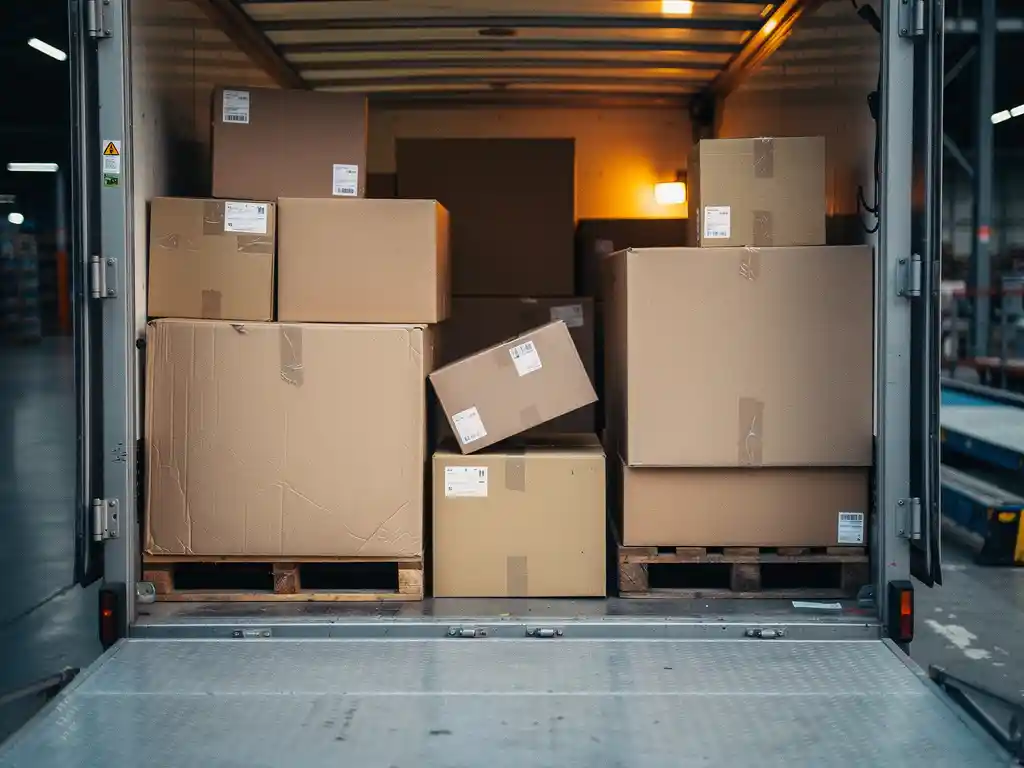
E-commerce businesses ship everything from small electronics to bulky furniture, and finding the right freight solution is rarely straightforward. As order volumes grow and customer expectations around delivery speed tighten, many online retailers are looking beyond standard parcel services and asking whether groupage transport could be the smarter, more cost-effective choice for their shipments.
This guide answers the most common questions about groupage transport in the context of e-commerce, helping you understand when it makes sense, what the trade-offs are, and how to decide whether it fits your logistics operation.
What is groupage transport, and how does it work?
Groupage transport is a freight model in which shipments from multiple senders are consolidated into a single truck or trailer. Rather than booking an entire vehicle for one consignment, each shipper pays only for the space their cargo occupies. A carrier or freight forwarder collects goods from various origins, consolidates them at a depot, and delivers them to their respective destinations along an optimized route.
The process typically works in stages. First, a carrier collects individual shipments from multiple customers. Those shipments are then sorted and loaded together at a consolidation hub, grouped by destination region or delivery route. The consolidated load travels as a single movement, and at the destination hub, shipments are deconsolidated and dispatched for final delivery. This model is also commonly referred to as less-than-truckload (LTL) shipping in North American markets, though the operational logic is the same.
Groupage is especially common in European road freight, where dense logistics networks make consolidation at regional hubs both practical and efficient. It sits between parcel delivery and full truckload (FTL) shipping in terms of shipment size, typically handling palletized goods or larger consignments that are too big for a parcel carrier but too small to justify a dedicated truck.
Is groupage transport a good fit for e-commerce shipments?
Groupage transport is a good fit for e-commerce businesses that regularly ship mid-to-large consignments, particularly palletized goods, bulky items, or B2B orders. It is less suited to high-volume, small-parcel consumer deliveries, where speed and individual tracking are the primary requirements. The right fit depends on shipment size, delivery timelines, and the nature of your customer base.
For e-commerce retailers selling larger products such as furniture, appliances, garden equipment, or industrial supplies, groupage offers a practical and affordable way to move freight without committing to full truckloads. B2B e-commerce operations, where buyers are more accustomed to scheduled delivery windows and pallet-based receiving, tend to benefit most from this model.
Consumer-facing e-commerce, on the other hand, often demands next-day or two-day delivery with precise tracking updates. Standard groupage networks are not always built for that level of speed or granularity. However, some carriers now offer premium groupage services with tighter transit times and improved shipment visibility, narrowing the gap for certain product categories.
What are the main advantages of groupage transport for online retailers?
The main advantages of groupage transport for online retailers are cost efficiency, reduced environmental impact, and access to freight capacity without the overhead of full truckload commitments. By sharing vehicle space with other shippers, retailers pay only for what they use, making it a financially sensible option for regular mid-sized consignments.
Here are the core benefits worth considering:
Lower cost per shipment: You share the vehicle cost across multiple shippers, which significantly reduces the per-unit freight cost compared to booking a full truck.
Flexibility in shipment size: Groupage accommodates irregular volumes without locking you into minimum load commitments.
Wider geographic reach: Established groupage networks offer extensive lane coverage, particularly across Europe, giving smaller retailers access to destinations that would otherwise require dedicated transport.
Reduced carbon footprint: Consolidated loads mean fewer vehicle movements overall, which supports sustainability goals that are increasingly important to both retailers and their customers.
For growing e-commerce businesses that have outgrown parcel shipping but are not yet generating enough volume to justify dedicated trucks, groupage fills an important gap in the logistics toolkit. A planning assistant can help identify exactly where groupage fits within your broader freight mix by analyzing your order data against route and carrier parameters.
What are the limitations and risks of groupage shipping?
The main limitations of groupage shipping are longer transit times, reduced control over delivery scheduling, and a higher risk of damage due to multiple handling touchpoints. Because shipments pass through consolidation and deconsolidation hubs and share space with other freight, they experience more movement than a direct, dedicated delivery would.
Transit times in groupage networks are typically longer than parcel or FTL services because routes are optimized for the collective load rather than any individual shipment. If a consignment misses a consolidation cutoff at a hub, it may be held until the next available departure, adding unexpected delays. This makes groupage less reliable for time-sensitive or perishable goods.
Damage risk is also worth acknowledging. Goods are handled multiple times across the journey, and unless packaging is robust and pallets are properly secured, fragile or irregularly shaped items can be vulnerable. Additionally, tracking visibility varies significantly between carriers. Some groupage operators offer real-time shipment tracking, while others provide only milestone updates, which can make it harder to proactively manage customer expectations.
How does groupage transport compare to parcel and full truckload shipping?
Groupage transport sits between parcel shipping and full truckload (FTL) shipping in terms of shipment size, cost structure, and delivery speed. Parcel services handle small, individual packages with fast transit and granular tracking. FTL dedicates an entire vehicle to a single shipper, offering maximum speed and control. Groupage serves the middle ground: larger consignments that do not fill a truck, at a shared cost.
Groupage vs. parcel shipping
Parcel shipping is optimized for speed, individual consumer delivery, and high-frequency small orders. It offers door-to-door service with detailed tracking and is ideal for e-commerce orders under roughly 30 to 50 kilograms. Groupage becomes more cost-effective as shipment weight and volume increase, typically from one pallet upward. Parcel carriers also tend to charge premium rates for heavy or oversized items, making groupage the more economical option at that threshold.
Groupage vs. full truckload shipping
FTL is the right choice when you have enough freight to fill a vehicle and need direct, fast delivery without intermediate handling. It offers the lowest damage risk and the most predictable transit times. However, FTL is only cost-effective when load utilization is high. For shipments that would leave a truck partly empty, groupage delivers better value. Many e-commerce businesses use both, routing high-volume lanes via FTL while using groupage for smaller or irregular shipments.
When should an e-commerce business switch to groupage transport?
An e-commerce business should consider switching to groupage transport when shipments consistently exceed parcel-carrier weight or size thresholds, when freight costs for oversized items become disproportionate, or when the business begins serving B2B customers who receive palletized deliveries. These are the clearest signals that parcel shipping is no longer the most efficient solution.
Other indicators that groupage may be the right move include shipping to international destinations where parcel networks are expensive or unreliable, fulfilling orders for bulky goods that require pallet handling, or operating in a product category where delivery speed expectations are more flexible. If your average order involves multiple pallets going to a business address, groupage is almost certainly the more practical and cost-effective model.
The transition does not have to be all or nothing. Many online retailers use a hybrid approach, relying on parcel services for consumer orders and groupage for wholesale or B2B channels. A dedicated coordination assistant can help manage this split efficiently, ensuring the right shipments are routed through the right channels without adding manual overhead. Reviewing your shipment data by weight, destination, and frequency will quickly reveal where groupage can replace more expensive alternatives.
How LogicPlan helps with groupage transport planning
Planning groupage shipments manually is time-consuming and error-prone. Grouping orders efficiently requires balancing weight, volume, destination proximity, carrier constraints, and real-time availability simultaneously. That is exactly where we come in. Our Groupage Planning Automation uses AI agents to analyze live order data and automatically consolidate shipments into optimized load plans, replacing the manual bundling process that eats into a planner’s day.
Here is what our solution does in practice:
Analyzes incoming orders in real time and clusters them by route, destination, and carrier parameters
Adapts groupage decisions dynamically as new orders arrive or conditions change
Reduces empty kilometers by ensuring loads are consolidated as efficiently as possible
Works alongside your existing TMS via a browser extension, with no migration or system disruption required
Importantly, our tool is not here to replace your transport planners. It is built to support them. The AI learns from each planner’s individual decision patterns, remembers exceptions, and improves over time, so the intelligence it applies reflects the way your team actually thinks and works. Planners stay in control; the automation handles the repetitive, data-heavy groundwork so they can focus on judgment calls that genuinely need human expertise.
If your team is managing groupage planning manually and feeling the strain of growing order volumes, LogicPlan is ready to help. Get in touch today and see how intelligent groupage automation can turn hours of planning into minutes.
Frequently Asked Questions
How do I find a reliable groupage carrier for my e-commerce business?
Start by evaluating carriers based on their network coverage for your key lanes, transit time guarantees, and tracking capabilities. Request references from shippers in similar product categories, and pay close attention to how carriers handle claims for damaged goods — this is often where service quality differences become most apparent. Freight forwarders can also be a practical entry point, as they typically have established relationships with multiple groupage operators and can help you compare options without committing to a single provider upfront.
What packaging requirements should I follow to protect goods in groupage shipments?
Because groupage shipments pass through multiple handling points, robust packaging is essential — more so than with parcel or FTL shipping. Palletize wherever possible, use stretch wrap and corner protectors, and ensure items are secured so they cannot shift during transit. For fragile or high-value goods, double-boxing with adequate internal cushioning and clear fragile labeling is strongly recommended. Always check your carrier's specific packaging guidelines, as non-compliance can void damage claims.
Can I use groupage transport for international e-commerce shipments, and what customs considerations apply?
Yes, groupage is widely used for international freight, particularly within Europe where cross-border road networks are well-developed. However, each consignment in a groupage load must have its own complete customs documentation — commercial invoice, packing list, and any required certificates — since individual shipments are cleared separately even though they travel together. Delays to one shipment in a consolidated load due to customs issues will not necessarily hold up others, but it is worth working with a freight forwarder experienced in cross-border groupage to ensure your paperwork is consistently accurate.
What happens if my groupage shipment is delayed or damaged — how do I handle claims?
In the event of a delay, contact your carrier or forwarder immediately and reference your consignment number to get a status update and revised delivery estimate. For damage, document everything thoroughly at the point of delivery — photograph the damaged goods and packaging before moving anything, and note any visible damage on the delivery receipt before signing. Submit a formal claim to the carrier as quickly as possible, as most operators have strict time windows (often 7 days for visible damage). Consider cargo insurance for higher-value shipments, as standard carrier liability in groupage is typically limited and may not cover the full value of your goods.
How can I estimate whether groupage is actually cheaper than my current parcel rates?
Run a straightforward cost comparison using three to six months of your own shipment data. For each shipment that exceeded your parcel carrier's standard weight or size thresholds, calculate what you actually paid versus a groupage quote for the same lane and dimensions. Most groupage carriers or freight forwarders will provide indicative rates based on pallet spaces and destination zones. As a general rule, groupage tends to become more cost-effective than parcel services once shipments exceed roughly 30–50 kg or one full pallet, but the exact crossover point depends on your specific carriers, lanes, and negotiated rates.
Is it possible to offer customers reliable delivery windows when shipping via groupage?
It is possible, but it requires choosing the right carrier and setting realistic expectations. Many groupage operators offer scheduled delivery windows — such as a half-day or specific time slot — as an add-on service, which is particularly useful for B2B customers who need to arrange staff for unloading. For consumer-facing deliveries, communicate estimated delivery ranges rather than exact dates, and use any tracking or milestone notifications your carrier provides to keep customers informed proactively. If precise delivery windows are critical to your customer experience, prioritize carriers that offer premium groupage services with tighter transit time guarantees.
How do I know when it's time to move from groupage to full truckload shipping on a specific lane?
The tipping point is typically when your regular shipment volume on a given lane consistently fills 60–70% or more of a standard trailer. At that utilization level, the cost difference between groupage and FTL narrows significantly, and the added benefits of FTL — direct routing, fewer handling touchpoints, and faster transit — start to outweigh the shared-cost advantage of groupage. Review your lane-level data quarterly, and if you find yourself regularly booking multiple pallet spaces on the same route and day, it is worth requesting FTL quotes to see whether a dedicated vehicle is now the more economical and operationally sound choice.
Next blog