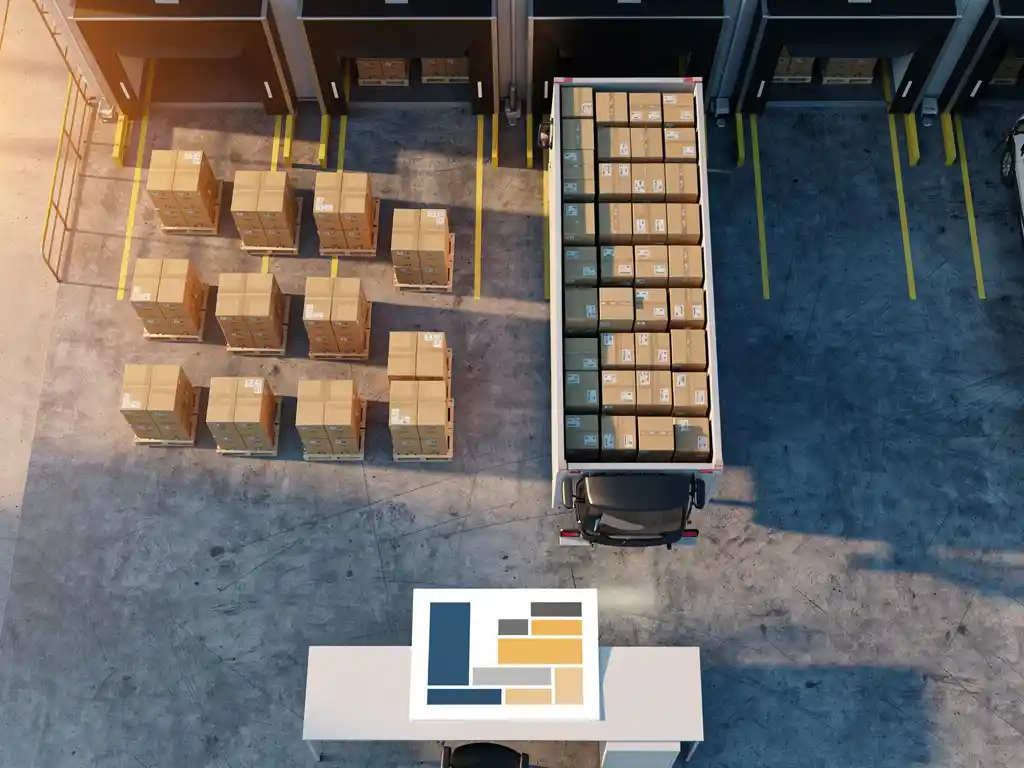
Less-than-truckload shipping sits at the heart of modern freight logistics, yet planning it manually remains one of the most time-consuming and error-prone tasks a transport planner faces. Juggling partial loads, matching shipments to available capacity, coordinating multiple carriers, and responding to last-minute changes – all at once, every single day – is a pressure that no spreadsheet or static routing tool was ever truly built to handle. In 2026, the question is no longer whether to automate LTL planning, but how to do it in a way that genuinely supports the people doing the work.
What is automated LTL planning and how does it work?
Automated LTL planning uses AI-driven systems to handle the complex process of grouping partial shipments, assigning them to carriers, and building optimized load plans without requiring a planner to do it manually from scratch. Unlike full truckload (FTL) shipping, where a single consignment fills an entire vehicle, LTL – also known as groupage or groupage transport – involves consolidating multiple smaller shipments from different customers into one truck. That consolidation logic is where the complexity lies.
Modern AI-powered planning systems work by ingesting live order data, checking carrier availability and contract rates, applying route parameters, and clustering shipments into efficient groups in real time. The system reasons through the problem the way an experienced planner would, but at a speed and scale no human can match alone. Crucially, the best implementations do not replace the planner – they work alongside them, surfacing recommendations and handling repetitive decisions so the planner can focus on judgment calls that truly require human expertise.
What are the main benefits of automating LTL planning?
The benefits of automating groupage planning are tangible and measurable. When AI handles the heavy lifting of load consolidation and carrier matching, transport operations become faster, leaner, and more consistent. Here are four of the most significant advantages planners and logistics managers report:
Reduced planning time: What used to take hours on a busy Monday morning can be completed in minutes, freeing planners to handle exceptions and customer communication.
Fewer empty kilometers: Smarter consolidation means fewer half-empty trucks on the road, which directly cuts fuel costs and carbon emissions.
Better carrier utilization: Automated systems match shipments to the right carrier based on live availability, contract rates, and historical performance – not habit or guesswork.
Improved consistency: Automation applies the same logic every time, reducing the variation that creeps in when planning depends entirely on individual memory or experience.
Beyond these operational gains, automating LTL planning also reduces the cognitive load on planners. When routine decisions are handled, planners can direct their attention to situations that genuinely need them.
How does LTL automation handle last-minute cancellations and changes?
This is where the difference between rule-based tools and genuine AI orchestration becomes most visible. When a cancellation arrives – whether by email, portal message, or phone call – a traditional system requires a planner to manually identify which loads are affected, check what carrier options remain, and rebuild the plan. That process can take significant time, especially when it happens during peak hours.
An AI-driven LTL planning system detects the disruption automatically, identifies the affected groupage shipments, checks available carrier options against current contract rates and performance history, and generates a revised allocation plan. The planner receives a clear recommendation rather than a pile of raw data to sort through. The result is faster recovery, less stress, and fewer costly last-minute decisions made under pressure.
What’s the difference between rule-based systems and AI-driven LTL planning?
Rule-based systems follow fixed logic: if condition A is met, do B. They work well in stable, predictable environments, but real logistics operations are rarely either of those things. When conditions shift – a driver calls in sick, a shipment is heavier than declared, a time window changes – rule-based tools either fail silently or require manual intervention to compensate.
AI-driven planning adapts. Instead of following a fixed script, an AI agent reasons through the current situation using live data, weighs trade-offs, and selects the best available option given actual conditions. It also learns over time, picking up on individual planning patterns, remembered exceptions, and the specific preferences of the team using it. That adaptive intelligence is what makes AI-powered transport planning genuinely different from the automation tools that came before it.
When should a transport company start automating LTL planning?
The honest answer is: earlier than most companies think. A common misconception is that automation only makes sense at scale – that you need hundreds of shipments per day before the investment pays off. In practice, even mid-sized operations with moderate LTL volumes see meaningful time savings and error reduction quickly.
The clearest signal that it is time to automate is when planners are spending more time on repetitive consolidation decisions than on the work that actually requires their expertise. If your team is manually matching groupage shipments to carriers every morning, rebuilding plans after every disruption, and struggling to keep up with order changes across multiple systems, the conditions are right. Modern tools like real-time coordination assistants can be deployed without replacing your existing TMS, which removes one of the biggest barriers to getting started.
What mistakes should be avoided when automating LTL planning?
Automation projects fail most often not because the technology is wrong, but because the implementation approach is. The most common mistakes include treating automation as a replacement for planners rather than a support for them, choosing tools that require a full TMS migration before delivering any value, and deploying systems that cannot adapt to the specific way your operation actually runs.
Equally important is avoiding tools that learn nothing over time. A system that applies the same generic logic on day one as it does six months later is not truly intelligent – it is just faster rule-following. The most effective LTL automation learns individual planning patterns, remembers exceptions, and improves with use, without ever overriding the planner’s judgment on decisions that matter.
How LogicPlan helps with groupage planning
LogicPlan’s Groupage Planning Automation is built specifically to solve the consolidation challenge at the core of LTL logistics. Our AI agents analyze live order data, carrier constraints, and route parameters to cluster shipments into optimized groups in real time – replacing the manual, time-consuming process of bundling partial loads without replacing the planners who understand the operation best. We work alongside your team, not instead of them.
Non-disruptive deployment: Works alongside your existing TMS via browser extension – no migration, no downtime, operational within minutes.
Adaptive learning: LogicPlan learns your planning patterns and remembers exceptions, improving with every decision your team makes together.
Real-time response: When cancellations or changes arrive, our system identifies affected groupage shipments and generates revised plans immediately.
Planner-centric by design: Built around real planning logic, so it works the way your team thinks – not the way a generic automation framework assumes you do.
If you are ready to reduce planning time, cut empty kilometers, and give your team the support they actually need, get in touch with LogicPlan and see how we can help your operation move faster without losing the human judgment that keeps it running well.
Frequently Asked Questions
How long does it typically take to see ROI after implementing LTL planning automation?
Most mid-sized transport operations report measurable time savings within the first few weeks of deployment, particularly in morning planning cycles where manual consolidation previously consumed hours. Full ROI — factoring in reduced empty kilometers, better carrier utilization, and fewer costly last-minute decisions — is typically visible within the first one to three months. The key accelerator is choosing a tool that works alongside your existing TMS from day one, rather than requiring a lengthy migration before delivering any value.
Can LTL automation work effectively if our shipment volumes vary significantly day to day or seasonally?
Yes — and in fact, variable volumes are one of the strongest arguments for AI-driven planning over rule-based tools. A rigid, rule-based system struggles when conditions shift dramatically, while an adaptive AI agent reasons through each day's actual data independently, scaling its consolidation logic to whatever volume and mix is present. This makes automation particularly valuable during peak seasons, when the pressure on planners is highest and the cost of poor consolidation decisions is greatest.
What data does an LTL planning system need to get started, and how complex is the setup?
At a minimum, an LTL automation system needs access to live order data, carrier contract rates, and basic route parameters such as delivery windows and geographic zones. Modern tools designed for non-disruptive deployment — such as browser extension-based solutions — can connect to your existing workflows without requiring a full data infrastructure overhaul. In practice, many operations are up and running within hours rather than weeks, with the system beginning to learn planning patterns from the very first sessions.
How do planners maintain control and override the system when they disagree with a recommendation?
The best LTL automation tools are designed so that the planner always has the final say — recommendations are surfaced as suggestions, not enforced actions. A planner can review, adjust, or override any proposed consolidation or carrier allocation at any point, and a well-designed system will learn from those overrides over time, incorporating them into future recommendations. This planner-centric approach is what distinguishes genuine AI assistance from black-box automation that removes human judgment from the loop.
What happens when a carrier in the automated plan suddenly becomes unavailable at short notice?
An AI-driven planning system continuously monitors carrier availability against current conditions and, when a carrier becomes unavailable, immediately identifies all affected shipments and generates a revised allocation using the next best available options based on contract rates and historical performance. The planner receives a clear, actionable recommendation rather than having to manually untangle the impact across multiple loads. This real-time replanning capability is one of the most tangible stress-reducers for teams handling high-disruption environments.
Is LTL automation suitable for operations that use a mix of owned fleet and third-party carriers?
Absolutely — in fact, mixed-fleet environments are where automated carrier matching delivers some of its greatest value, since the consolidation logic must weigh owned-fleet capacity, cost structures, and availability against third-party carrier options simultaneously. A capable AI planning system handles this trade-off dynamically, prioritizing owned fleet where it is cost-effective and falling back to contracted carriers when needed, all within the same planning cycle. This prevents the common inefficiency of defaulting to habit-based carrier selection rather than data-driven allocation.
How does LTL planning automation help with sustainability and reducing carbon emissions?
Smarter consolidation directly reduces the number of partially loaded trucks on the road, which is one of the most impactful levers available to logistics operations looking to cut carbon emissions without sacrificing service levels. Automated systems consistently outperform manual planning on load fill rates because they evaluate every possible shipment combination against available capacity in real time — something that is simply not feasible to do manually at scale. For companies with emissions reporting obligations or sustainability targets, this improvement in load efficiency also generates cleaner, more auditable data on kilometers driven per unit shipped.
Next blog