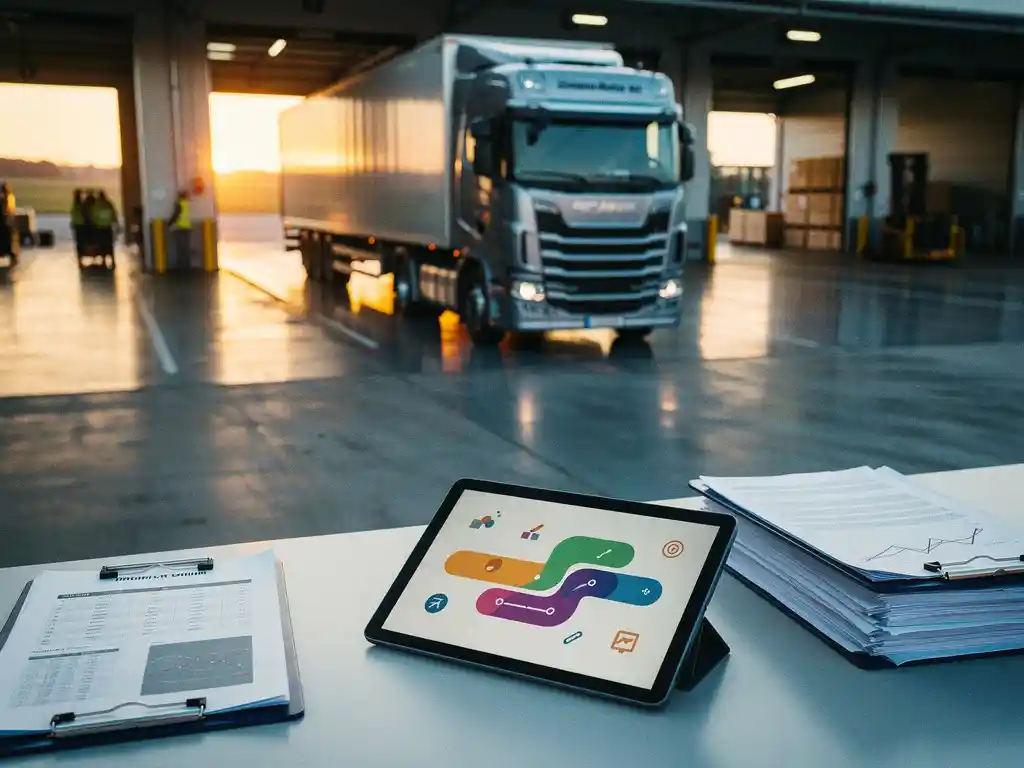
Freight scheduling automation is reshaping how transport teams operate—and for good reason. Managing dozens of shipments, carriers, and delivery windows simultaneously is genuinely complex work, and the traditional approach of doing it all manually is struggling to keep pace with the speed modern logistics demands. Whether you are a transport planner juggling Monday morning chaos or a logistics manager looking to reduce operational costs, understanding what freight scheduling automation actually offers is a practical first step.
This article answers the most common questions about freight scheduling automation clearly and directly, so you can make an informed decision about whether it belongs in your operation.
What is freight scheduling automation?
Freight scheduling automation is the use of software, AI agents, or intelligent systems to plan, assign, and optimize the movement of freight without requiring manual input for every decision. Instead of a planner manually matching loads to carriers and building routes from scratch, automated systems analyze orders, constraints, and real-time data to generate optimized schedules autonomously.
Modern freight scheduling automation goes well beyond simple rule-based logic. Advanced platforms use AI agents powered by large language models to reason through competing priorities, adapt to changing conditions, and coordinate across multiple systems simultaneously. The scope typically covers order intake, load grouping, carrier selection, route optimization, and exception handling, all within a single continuous workflow.
What are the main benefits of freight scheduling automation?
The main benefits of freight scheduling automation include faster planning cycles, fewer empty kilometers, lower fuel costs, reduced administrative burden, and more consistent decision-making under pressure. Together, these improvements translate into measurable cost savings and a more resilient logistics operation.
Here is a closer look at the most impactful benefits:
Time savings: Tasks that once took hours, such as grouping orders and assigning carriers on a busy Monday morning, can be completed in minutes.
Fewer empty kilometers: Intelligent load consolidation ensures trucks leave fuller, directly reducing fuel consumption and carbon footprint.
Better carrier decisions: Automated systems check contract rates and historical carrier performance simultaneously, something a planner simply cannot do at scale in real time.
Reduced error risk: Automating repetitive matching and scheduling tasks removes a significant source of human error from high-volume, time-pressured workflows.
Beyond operational efficiency, there is a less obvious but equally important benefit: planners get their attention back. When the system handles routine scheduling decisions, experienced planners can focus on complex exceptions, customer relationships, and strategic calls that genuinely require human judgment.
How does automated freight scheduling handle real-time changes?
Automated freight scheduling handles real-time changes by continuously monitoring live data inputs, detecting disruptions as they occur, and generating revised plans without waiting for a planner to intervene manually. When a cancellation, delay, or capacity change occurs, the system identifies affected loads, evaluates available alternatives, and produces an updated schedule automatically.
This is one of the most significant advantages over traditional planning tools. Static solvers generate a plan based on conditions at a single point in time, but logistics reality rarely stays still. A cancellation that arrives by email, portal message, or system notification can trigger a cascade of changes that a manual process handles slowly and inconsistently.
An AI-driven orchestration approach detects the incoming change, cross-references it against active orders and carrier availability, validates the revised assignment against contract terms, and escalates only the exceptions that genuinely require a human call. This keeps the operation moving without overwhelming the planner with every small update.
What’s the difference between traditional and automated freight planning?
The key difference between traditional and automated freight planning is adaptability. Traditional planning relies on planners manually processing information and making decisions within static tools, while automated freight planning uses intelligent systems to process live data, apply optimization logic, and adjust continuously as conditions change.
Traditional freight planning typically looks like this: a planner opens multiple systems, pulls order data, checks carrier availability, builds a load plan manually, and then repeats the process when something changes. It is effective when volumes are manageable and conditions are stable, but it scales poorly and breaks down under pressure.
Automated freight planning replaces the repetitive, data-heavy parts of that workflow with AI-driven processes, while keeping the planner in control of judgment calls. The planner is not removed from the equation but is freed from the information overload that makes the job exhausting. This is an important distinction: automation at its best supports how planners think, rather than bypassing them entirely.
Who benefits most from freight scheduling automation?
Freight scheduling automation delivers the greatest value to transport planners managing high volumes of daily orders, logistics managers overseeing multiple carriers and lanes, and operations teams where manual planning bottlenecks are causing delays, errors, or excessive overtime.
The clearest candidates are teams where planners spend the majority of their day on repetitive data entry, order matching, and reactive rescheduling rather than strategic coordination. If your team regularly experiences Monday morning chaos, struggles to respond quickly to cancellations, or finds that plans are outdated by the time they are executed, automation directly addresses those friction points.
Smaller operations also benefit, particularly when a single planner is responsible for a workload that would challenge a larger team. Automation effectively extends the capacity of an individual planner without requiring additional headcount.
How do you get started with freight scheduling automation?
Getting started with freight scheduling automation typically involves three steps: assessing which planning tasks consume the most time and cause the most errors, selecting a solution that integrates with your existing systems without requiring a full migration, and running a focused pilot on a specific route or order type before scaling.
One common concern is disruption. Many teams assume that adopting automation means replacing their current transport management system or undergoing a lengthy implementation process. That is not always the case. Solutions designed with a non-disruptive deployment approach can work alongside existing TMS tools, meaning your team does not need to change how it operates on day one.
The most important mindset shift is treating automation as a collaborative tool rather than a replacement. The goal is not to remove planners from the process but to give them better support so they can make faster, more informed decisions with less manual effort. A system that learns your planning patterns and adapts to your specific exceptions over time will become more valuable the longer it is in use.
How LogicPlan helps with groupage planning automation
LogicPlan’s Groupage Planning Automation directly addresses one of the most time-consuming tasks in daily freight scheduling: consolidating transport orders into optimized load groups. Instead of manually bundling shipments based on static rules, our AI agents analyze live order data, carrier constraints, and route parameters in real time to cluster shipments intelligently and efficiently.
Here is what makes our approach different:
Planner-centric design: Built around real planning logic, not generic automation frameworks, so it works the way your team already thinks.
Non-disruptive deployment: Runs alongside your existing TMS via a browser extension, with no migration required and operational within minutes of installation.
Adaptive intelligence: Learns individual planning patterns, remembers exceptions, and improves over time, growing smarter the more it works with your team.
Groupage Planning Automation is not here to replace your transport planners. It is designed to work with them, handling the repetitive consolidation work so they can focus on the decisions that genuinely require experience and judgment. If you are ready to reduce planning time, cut empty kilometers, and give your team room to breathe, LogicPlan is ready to show you how it works in practice.
Frequently Asked Questions
How long does it typically take to see measurable results after implementing freight scheduling automation?
Most teams begin to see measurable time savings within the first few weeks of deployment, particularly on high-volume planning tasks like order grouping and carrier assignment. Broader operational improvements — such as reduced empty kilometers and lower error rates — typically become quantifiable within the first one to three months as the system learns your planning patterns and adapts to your specific exceptions. The key is starting with a focused pilot on a well-defined route or order type, which makes it easier to benchmark results before scaling.
What happens when the automated system encounters a situation it hasn't seen before or can't resolve on its own?
Well-designed freight scheduling automation is built to escalate genuinely complex or ambiguous situations to a human planner rather than forcing an incorrect decision. The system flags the exception, provides the planner with the relevant context — such as affected loads, available alternatives, and contract constraints — so they can make an informed call quickly. This escalation logic is what separates intelligent automation from rigid rule-based tools: the goal is to handle the predictable majority autonomously while keeping experienced planners in control of the edge cases that truly require judgment.
Does freight scheduling automation work with our existing TMS, or do we need to replace it?
You do not need to replace your existing transport management system to benefit from freight scheduling automation. Modern solutions are designed to integrate alongside your current TMS rather than replace it, often operating via lightweight connectors or browser-based extensions that require no migration and minimal setup time. This non-disruptive approach means your team can continue working in familiar tools while the automation layer handles repetitive planning tasks in the background.
What are the most common mistakes teams make when adopting freight scheduling automation?
The most common mistake is treating automation as an all-or-nothing switch — either automating everything at once or dismissing it entirely because full replacement feels unrealistic. A more effective approach is to start narrow, targeting the specific planning tasks that consume the most time or generate the most errors, and expand from there. Another frequent pitfall is underestimating the importance of planner buy-in: teams that involve their planners in the rollout and frame automation as a support tool rather than a threat consistently see faster adoption and better outcomes.
Can freight scheduling automation handle multi-carrier and multi-lane operations, or is it better suited to simpler setups?
Freight scheduling automation is particularly well-suited to multi-carrier and multi-lane environments, where the volume of variables — contract rates, carrier performance history, route parameters, delivery windows — quickly exceeds what a planner can realistically process manually in real time. The more complexity your operation involves, the more value intelligent automation delivers, since it can simultaneously cross-reference constraints across all carriers and lanes without the cognitive overload that makes manual planning unsustainable at scale. Simpler operations still benefit, but the ROI tends to be most dramatic in high-volume, multi-variable environments.
How does freight scheduling automation support sustainability and carbon reduction goals?
Freight scheduling automation contributes directly to sustainability goals by reducing empty kilometers through smarter load consolidation, ensuring trucks leave fuller and travel fewer unnecessary miles. Over time, optimized routing and better carrier utilization also reduce overall fuel consumption across your network. For logistics teams under pressure to report on and reduce their carbon footprint, automation provides both the operational efficiency and the data visibility needed to track progress and demonstrate measurable improvements.
Is freight scheduling automation suitable for smaller logistics teams, or is it primarily built for large enterprises?
Freight scheduling automation is genuinely valuable for smaller teams, and in some ways the impact is even more pronounced. A single planner managing a workload that would challenge a larger team can use automation to effectively multiply their capacity without adding headcount — handling more orders, more carriers, and more exceptions than would otherwise be possible. The key is choosing a solution with a low-friction deployment model that doesn't require a dedicated IT project or lengthy onboarding, so a lean team can get up and running quickly and start seeing benefits without significant upfront investment.
Next blog