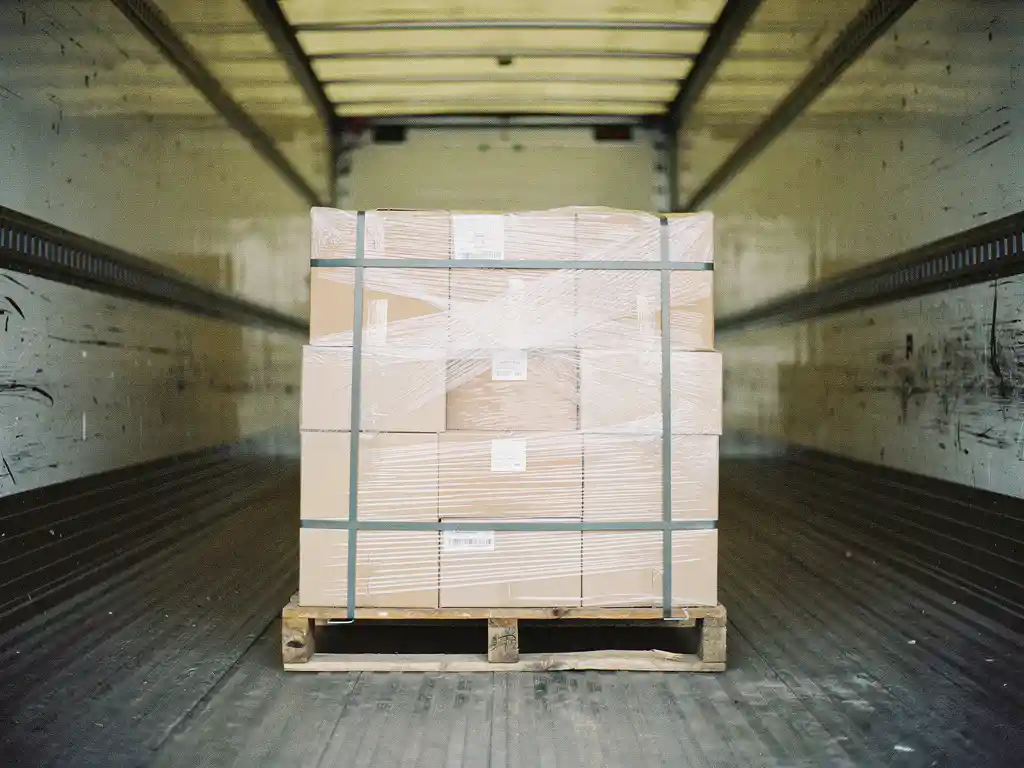
Groupage transport is one of the most efficient ways to move freight across Europe, but it comes with a set of rules that every transport planner needs to understand. From how loading meters are calculated to how weight is distributed across a trailer, the details matter—and getting them wrong leads to delays, rejected loads, and frustrated customers. This guide walks you through the essential loading rules for groupage transport so you can plan smarter and avoid the most common pitfalls.
What is groupage transport, and how does it work?
Groupage transport is a freight model in which multiple shipments from different senders are consolidated into a single vehicle or trailer. Instead of booking a full truck for a partial load, shippers share trailer space with other consignments traveling in the same direction, paying only for the space and weight their cargo occupies. A groupage carrier collects these individual shipments at a depot, groups them by destination, and delivers them on a combined route.
The process typically involves a collection leg, a hub consolidation point, and a distribution leg. At the hub, shipments are sorted and loaded onto outbound trailers based on route, delivery sequence, and load compatibility. This model makes freight more cost-effective for shippers with partial loads, but it also introduces complexity: every load plan must account for multiple consignments with different dimensions, weights, and handling requirements—all sharing the same space.
What are the standard loading rules for groupage transport?
The standard loading rules for groupage transport govern how freight is physically arranged in the trailer to ensure safety, legal compliance, and efficient use of space. Cargo must be loaded so that weight is distributed evenly across the axles, goods are secured against movement during transit, and the total payload does not exceed the vehicle’s legal maximum. Fragile or high-value goods are typically loaded last and positioned to minimize contact with heavier items.
Beyond weight distribution, the loading sequence follows the delivery order in reverse—the last stop is loaded first, and the first delivery is positioned closest to the rear doors. This rule is critical in groupage because the driver often cannot rearrange cargo mid-route. Carriers also apply compatibility rules: hazardous goods, temperature-sensitive freight, and standard pallets must not be mixed unless the vehicle is specifically equipped and certified for those combinations.
How are loading meters calculated in groupage shipments?
Loading meters (LDM) measure the length of trailer floor space a shipment occupies, regardless of height. One loading meter equals one meter of trailer length across the full standard width of 2.4 meters. To calculate LDM, divide the total floor area of your shipment (length multiplied by width in meters) by 2.4. A Euro pallet measuring 1.2 m × 0.8 m occupies 0.4 LDM; two Euro pallets placed side by side occupy 0.4 LDM together because they fit within the 2.4-meter trailer width.
In groupage transport, LDM is the primary billing unit alongside weight. Carriers charge whichever is greater: the actual weight or the volumetric equivalent based on LDM. This means planners need to calculate both to determine which applies to each consignment. Accurate LDM calculation is essential not just for pricing, but for ensuring the trailer is not overbooked—a common source of loading conflicts at the depot. A planning assistant can automate these calculations across high volumes of orders, reducing the risk of overbooking before freight reaches the hub.
What are the weight and stacking limits in groupage loading?
Standard European trailers have a maximum payload of around 24,000 kg, but the practical limit per groupage shipment depends on axle-weight distribution and the combined weight of all co-loaded freight. Individual pallets in groupage are generally limited to 1,000 kg per Euro pallet, and stacking is permitted only when the cargo below is structurally capable of bearing the load above. Most groupage carriers apply a default no-stacking rule unless the shipper explicitly marks the goods as stackable.
Height limits also apply. Standard curtainsider trailers offer an internal loading height of approximately 2.7 meters. Goods that exceed this height require specialist equipment and must be declared in advance. For planners, the practical implication is straightforward: always declare accurate dimensions, weight, and stacking instructions on the shipping documentation. Undeclared restrictions discovered at the loading dock cause delays that ripple through the entire consolidated load.
What causes loading errors and delays in groupage transport?
The most common causes of loading errors in groupage transport are inaccurate shipment data, poor communication between planners and depot staff, and last-minute order changes that are not reflected in the load plan. When declared dimensions or weights do not match the actual freight, the entire load sequence may need to be rearranged, creating delays for every other consignment in the trailer.
Other frequent issues include:
Missing or incorrect hazardous goods declarations that block loading
Unstackable goods loaded beneath lighter freight due to unclear labeling
Late arrivals at the consolidation hub that force replanning under time pressure
Mismatched delivery sequences that require cargo to be repositioned on-site
Many of these errors originate not at the depot, but during the planning phase. When planners are managing high volumes of orders across multiple systems, small data inconsistencies are easy to miss—and they compound quickly in a consolidated load where every consignment affects the others. Effective coordination between planning and depot teams is one of the most reliable ways to catch these issues before they reach the loading dock.
How can transport planners ensure compliance with groupage loading rules?
Transport planners can ensure compliance with groupage loading rules by maintaining accurate, complete shipment data from the moment an order is created, establishing clear communication protocols with depot teams, and building load plans that account for delivery sequence, weight distribution, and cargo compatibility before the freight arrives at the hub.
Practical steps that make a measurable difference include standardizing how shippers submit dimension and weight data, automatically flagging non-stackable or hazardous goods during order entry, and reviewing load plans against carrier-specific constraints before confirming bookings. The earlier these checks happen in the planning cycle, the fewer corrections are needed at the loading dock.
Staying current with carrier-specific rules also matters. Different groupage networks apply their own LDM thresholds, stacking policies, and compatibility restrictions on top of general regulations. Planners who know these rules in advance can build compliant load plans from the start rather than discovering conflicts at the last moment.
How LogicPlan helps with groupage transport planning
Keeping up with groupage loading rules, LDM calculations, and carrier constraints across dozens of daily orders is exactly the kind of work that drains planning capacity. LogicPlan’s Groupage Planning Automation is built to take that burden off planners’ shoulders without taking away their judgment. Our AI agents analyze live order data, carrier constraints, and route parameters to consolidate shipments into optimized load plans in real time—replacing static, rule-based grouping with adaptive intelligence that reflects actual conditions.
Here is what that means in practice:
Shipments are automatically grouped based on route, LDM, weight, and compatibility rules
Load plans update dynamically when orders change, are canceled, or arrive late
Carrier-specific constraints are applied automatically, reducing compliance errors at the depot
Exceptions that require human judgment are flagged and escalated to the planner immediately
LogicPlan is not a replacement for experienced transport planners. It works alongside you, learns your planning patterns, remembers the exceptions you have handled before, and gets sharper over time. It deploys via a browser extension alongside your existing TMS—no migration, no disruption, and operational within minutes. If groupage planning is costing your team hours of manual work every week, get in touch with LogicPlan to see how our AI assistant can help you put that time to better use.
Frequently Asked Questions
What is the difference between loading meters and volumetric weight, and which one should I use for pricing?
Loading meters (LDM) measure the floor space a shipment occupies along the trailer's length, while volumetric weight converts that space into a weight equivalent for billing purposes. In groupage transport, carriers typically charge based on whichever is greater: the actual gross weight or the volumetric equivalent derived from LDM. As a rule of thumb, calculate both figures for every consignment before booking — low-density, bulky freight is almost always billed on LDM, while dense, compact cargo is more likely to be charged by actual weight.
How do I handle a shipment that contains both hazardous and standard goods in a groupage load?
Mixed loads containing hazardous goods (ADR-classified freight) and standard cargo require the vehicle to be ADR-certified, and the driver must carry the correct documentation, placards, and safety equipment. You must declare the hazardous goods class, UN number, and packing group at the time of booking — never at the loading dock. If your groupage carrier does not operate ADR-certified vehicles on that lane, the hazardous portion must be separated and booked with a specialist carrier, even if the destination is the same.
What should I do if my shipment dimensions change after the load plan has already been confirmed?
Notify the carrier or depot immediately — even a small change in dimensions or weight can invalidate the load sequence and affect every other consignment in the trailer. Most groupage carriers have a cut-off time for amendments, after which changes may incur a surcharge or cause the shipment to be rolled to the next available departure. Building a direct communication line between your order management system and the carrier's planning team is the most effective way to handle late changes without causing downstream delays.
How can I tell whether my goods are suitable for stacking in a groupage trailer?
Goods are generally considered stackable if the packaging is structurally rigid enough to bear the weight of cargo placed on top without deforming or risking damage. Common stackable formats include standard Euro pallets loaded with boxed goods, shrink-wrapped cartons on a flat pallet base, and crated industrial components. If there is any doubt, mark the shipment as non-stackable on all documentation and apply visible 'Do Not Stack' labels to the packaging — this protects your cargo and gives depot staff unambiguous loading instructions.
Are there specific groupage loading rules that vary between countries or carriers in Europe?
Yes, and this is one of the most frequently overlooked aspects of cross-border groupage planning. While general weight and dimension limits are broadly aligned with EU regulations, individual carriers apply their own LDM thresholds, stacking policies, pallet type restrictions, and compatibility rules on top of those baseline requirements. For example, some networks cap individual consignments at a specific LDM threshold before reclassifying them as partial loads, while others have stricter rules for co-loading food-grade and non-food freight. Always request and review the carrier's specific loading guidelines for each lane you operate on.
What is the most common mistake transport planners make when building groupage load plans?
The single most common mistake is relying on shipper-declared data without validating it against actual freight dimensions and weights. Shippers frequently round figures, omit stacking restrictions, or fail to update documentation when packaging changes — and in a consolidated load, one inaccurate consignment can force a full resequence at the depot. Implementing a validation step at order entry, where declared data is cross-checked against historical shipment records or carrier tolerances, catches the majority of these discrepancies before they reach the loading dock.
At what point does a groupage shipment become large enough to consider booking a dedicated partial or full truckload instead?
A useful rule of thumb is that once a single consignment exceeds 6–7 LDM or roughly 5,000–6,000 kg, it is worth comparing the groupage rate against a partial truckload (PTL) or full truckload (FTL) quote. Beyond that threshold, groupage pricing often becomes less competitive, and the operational complexity of fitting a large consignment into a consolidated trailer increases the risk of loading conflicts and delays. Transit time is also a factor — dedicated loads typically offer faster, more predictable delivery windows than consolidated routes with multiple stops.
Next blog