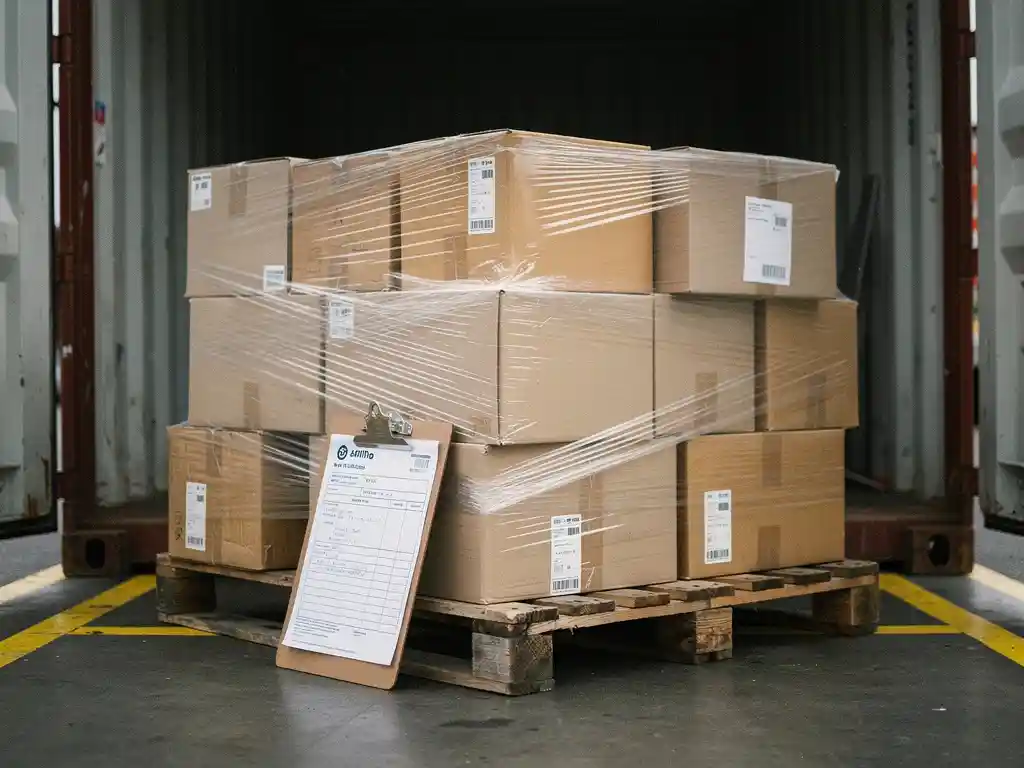
Groupage transport is one of the most cost-effective ways to move freight across Europe, but it comes with a layer of customs complexity that catches many shippers off guard. When multiple consignments from different senders share a single vehicle, the customs picture becomes considerably more involved than it would be for a full truckload moving between two parties.
Understanding which customs rules apply to groupage transport in Europe is essential for anyone involved in cross-border logistics. Whether you are shipping a single pallet or coordinating dozens of consolidated loads, the rules around documentation, declarations, and clearance procedures directly affect how quickly your freight moves and how much it costs.
What is groupage transport, and how does it work in Europe?
Groupage transport, also known as less-than-truckload (LTL) or groupage freight, is a shipping method in which multiple smaller consignments from different shippers are consolidated into a single vehicle or container. Each shipment retains its own identity, documentation, and customs status, but shares the transport cost with other loads heading in the same direction.
In Europe, groupage operations are typically coordinated by a freight forwarder or groupage operator who collects individual shipments at a consolidation hub, groups them by destination region, and dispatches them together. At the destination, the load is deconsolidated, and each shipment is delivered separately. This model makes cross-border shipping accessible for businesses that do not generate enough volume to fill an entire truck.
The efficiency of groupage depends heavily on how well shipments are matched and sequenced. Delays affecting one consignment in the group can have a knock-on effect on all other shipments sharing the same vehicle, which is why planning precision matters enormously in this model.
What customs rules apply to groupage shipments crossing EU borders?
Customs rules for groupage shipments crossing EU borders depend on whether the goods are moving within the European Union or entering or exiting it. Within the EU single market, goods circulate freely without customs duties or import declarations. However, when a groupage load crosses an external EU border, every individual consignment in that load must comply with the customs rules of the destination country or trading bloc.
For shipments entering or leaving the EU, each consignment requires its own customs declaration, even though it shares a vehicle with other goods. The carrier or freight forwarder typically submits these declarations electronically to customs authorities before, or at, the point of border crossing. EU customs law is governed by the Union Customs Code (UCC), which sets out the procedural framework for all import and export declarations, valuation, origin rules, and duty calculations.
It is also worth noting that the EU operates a risk-based customs control system. Groupage loads may be selected for physical inspection based on risk profiling, and if one consignment in a groupage vehicle is flagged for inspection, it can delay the entire load. This is a practical reality that every groupage planner needs to account for.
What documents are required for groupage customs clearance?
For groupage customs clearance, each individual consignment within the consolidated load requires its own set of documents, even though they travel together. The core documents typically required are a commercial invoice, a packing list, a CMR consignment note, and a customs declaration (such as an import or export entry). Depending on the goods and destination, additional certificates may apply.
Here is a summary of the key documents typically required per consignment in a groupage shipment:
Commercial invoice: States the value, description, and parties involved in the transaction.
CMR consignment note: The standard road freight transport document covering the entire vehicle.
Packing list: Details the physical contents, weights, and dimensions of the shipment.
Customs declaration (SAD or equivalent): The formal declaration submitted to customs authorities.
For goods subject to specific controls, such as food products, chemicals, or items with dual-use classification, additional documentation such as phytosanitary certificates, export licences, or certificates of origin may be mandatory. Missing or incorrect documents are among the most common causes of customs delays in groupage operations.
What’s the difference between intra-EU and non-EU groupage customs rules?
The key distinction is that intra-EU groupage transport between EU member states involves no customs formalities, while groupage shipments crossing an external EU border require full customs declarations for every consignment. Goods moving freely within the EU benefit from the single market, meaning no import duties, no customs declarations, and no border checks related to trade.
Non-EU groupage, by contrast, involves full customs procedures at the point of entry or exit. This includes the submission of an Entry Summary Declaration (ENS) before arrival, import or export declarations, duty and VAT assessments, and potentially physical inspection. Countries outside the EU, such as the United Kingdom, Switzerland, Norway, and Turkey, each have their own customs regimes, meaning the rules vary depending on which non-EU country is involved.
A groupage load travelling from Germany to the Netherlands, for example, crosses no customs border whatsoever. The same load travelling from Germany to the United Kingdom must comply with both EU export requirements and UK import requirements, with each consignment declared individually on both sides of the border.
How does customs clearance work when groupage loads cross multiple countries?
When a groupage load crosses multiple countries, customs clearance is typically handled through the Common Transit Convention (CTC) or the EU’s transit procedure (T1 or T2), which allows goods to move through intermediate countries under a single transit declaration without paying duties at each border crossing. The goods are cleared for customs purposes only at their final destination.
Under this system, a transit guarantee is lodged to cover potential duties during transit, and the goods travel under a Movement Reference Number (MRN) that is electronically tracked by customs authorities along the route. When the shipment reaches its destination customs office, the transit procedure is discharged, and the final import declaration is lodged.
For groupage operators, managing transit procedures across multiple consignments in a single vehicle adds significant administrative complexity. Each consignment may have a different destination country, different commodity codes, and different duty rates, all of which must be handled correctly before the vehicle departs. Effective coordination across these moving parts is essential to keeping multi-country groupage operations running smoothly.
What customs mistakes most commonly delay groupage shipments?
The most common customs mistakes that delay groupage shipments include incorrect or incomplete documentation, misclassified commodity codes, undervalued or misdeclared goods, and missing certificates for controlled products. Even a single error on one consignment within a groupage load can hold up the entire vehicle at the border.
Other frequent issues include:
Incorrect country of origin declarations: Particularly relevant post-Brexit for UK-EU shipments, where preferential tariff rates depend on correct proof of origin.
Late submission of pre-arrival declarations: The EU’s Import Control System 2 (ICS2) requires advance filing before goods arrive.
Mismatched data between the CMR and customs declaration: Discrepancies between the transport document and the customs entry can trigger manual review.
Expired or missing regulatory certificates: Food, plant, and animal products require specific health certificates that must be valid at the time of crossing.
Avoiding these mistakes requires careful coordination between the shipper, freight forwarder, and customs agent, often under significant time pressure. This is precisely where better planning and coordination tools can make a measurable difference.
How LogicPlan Helps with Groupage Transport Planning
Customs complexity is only one part of what makes groupage transport challenging. Behind every successful groupage shipment is a planning process that has to account for consolidation logic, carrier availability, route sequencing, and real-time changes, all at once. This is where we come in.
Our Groupage Planning Automation service uses AI agents to analyze live order data, carrier constraints, and route parameters, consolidating shipments into optimized load plans in real time. Rather than replacing the transport planner, our solution works alongside them, learning individual planning patterns, remembering exceptions, and improving over time. The planner stays in control; we handle the complexity that would otherwise consume hours of their day.
Here is what makes our approach different:
Non-disruptive deployment: Works alongside your existing TMS via a browser extension; no migration required.
Planner-centric design: Built around real planning logic, not generic automation frameworks.
Adaptive intelligence: Learns with the planner, not instead of them.
If your team is spending too much time on manual groupage decisions while customs and coordination pressures keep growing, LogicPlan is ready to help. Get in touch with us to see how our AI-powered groupage planning can make your operation faster, smarter, and more resilient.
Frequently Asked Questions
How do I get started with customs compliance if I'm new to groupage shipping?
The best starting point is to work with an experienced freight forwarder or customs broker who specialises in groupage operations for your target trade lanes. Before your first shipment, ensure you have the correct commodity codes (HS codes) for all your products, understand the duty rates that apply, and have a template set of documents — commercial invoice, packing list, and CMR — ready to complete accurately every time. Investing time upfront in getting these foundations right will prevent costly delays once shipments are in motion.
What happens if one consignment in my groupage load is held by customs?
If customs authorities detain or inspect a single consignment within a groupage vehicle, the practical impact depends on the operator's procedures and the severity of the issue. In many cases, the entire vehicle is held until the matter is resolved, which can delay all other consignments sharing that load. Some groupage operators have contingency arrangements to transship unaffected cargo onto another vehicle, but this is not always possible at short notice. This is one of the strongest reasons to ensure your documentation is flawless before the vehicle departs — your cargo can be delayed by someone else's mistake, and vice versa.
Do I need a customs agent, or can I handle groupage customs declarations myself?
In most cases, businesses shipping groupage freight rely on a customs agent or freight forwarder to submit declarations on their behalf, particularly for cross-border EU shipments where procedures like ICS2 pre-arrival filings and transit declarations (T1/T2) require specialist knowledge and approved software access. While it is legally possible to act as your own declarant in many countries, the complexity and risk of errors make self-representation impractical for most shippers unless they have dedicated in-house customs expertise. For occasional or high-value shipments, the cost of a professional customs agent is almost always justified.
How do preferential tariff rates and rules of origin affect my groupage shipments?
If your goods qualify for a preferential tariff rate under a trade agreement — such as the EU-UK Trade and Cooperation Agreement — you can significantly reduce or eliminate import duties, but only if you can prove the correct origin of your goods with valid documentation, such as a supplier's declaration or a statement on origin. In a groupage context, each consignment must independently meet the rules of origin requirements; the origin status of other goods in the same vehicle is irrelevant. Failing to provide valid proof of origin means your goods will be assessed at the full (MFN) duty rate, which can be a costly and avoidable outcome.
What is ICS2, and how does it affect groupage shipments entering the EU?
ICS2 (Import Control System 2) is the EU's advance cargo information system, which requires carriers and freight forwarders to submit an Entry Summary Declaration (ENS) before goods physically arrive at the EU border. For groupage road freight, this means pre-arrival data must be filed for every consignment in the load, not just the vehicle as a whole. Non-compliance or late submission can result in the load being flagged for intervention or refused entry, causing significant delays. If you are shipping into the EU from a third country, confirm with your freight forwarder that ICS2 filings are part of their standard process.
Can groupage transport be used for goods that require special customs licences or certificates?
Yes, but it requires careful advance planning. Goods such as food products, pharmaceuticals, chemicals, dual-use items, and certain agricultural products can travel as part of a groupage load, provided all required licences, health certificates, and regulatory approvals are in order before the shipment departs. The challenge in a groupage context is that these goods may need to enter through a designated Border Inspection Post (BIP) or customs office equipped to handle them, which may not align with the standard route used for the rest of the consolidated load. Always disclose the nature of controlled goods to your freight forwarder at the booking stage so the appropriate routing and documentation can be arranged.
How can I reduce the risk of customs delays without switching freight forwarders or overhauling my logistics setup?
The most impactful steps you can take without a major operational change are to standardise your document preparation process, maintain an up-to-date product classification library with verified HS codes, and build in earlier cut-off times for document submission relative to vehicle departure. Establishing a clear communication protocol between your internal team and your freight forwarder — so that any last-minute changes to shipment details are flagged immediately — also reduces the risk of data mismatches between the CMR and customs declaration. On the planning side, tools that automate consolidation logic and flag exceptions early, like LogicPlan's groupage planning solution, can further reduce the operational pressure that leads to rushed and error-prone documentation.
Next blog