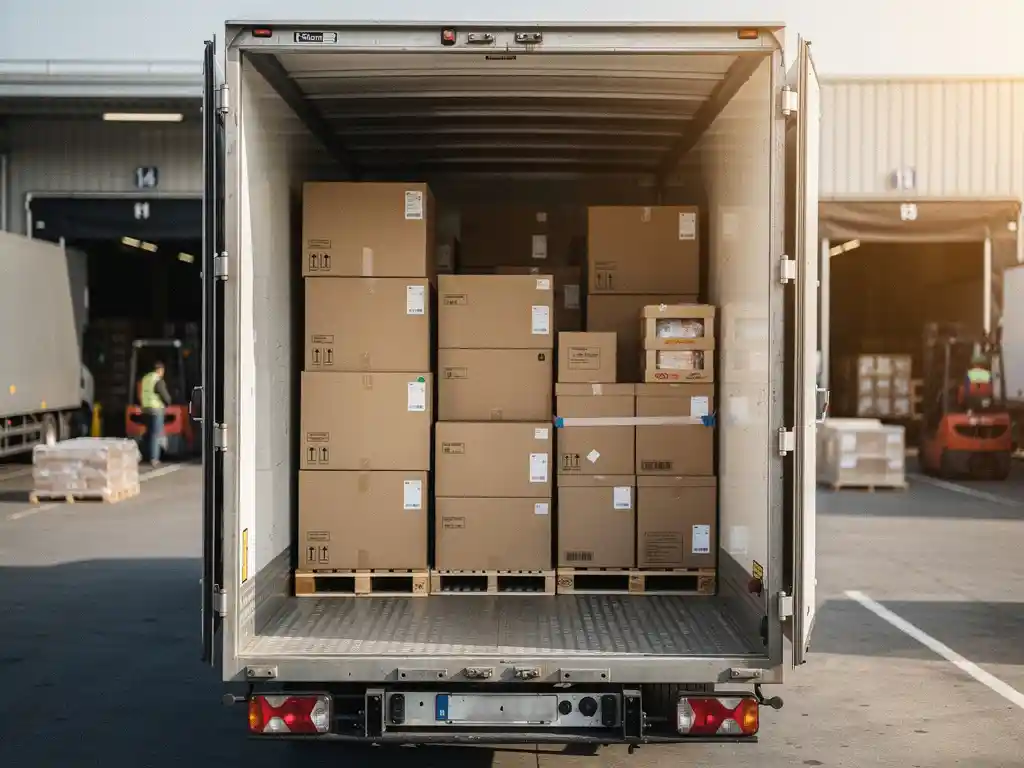
Groupage transport is one of those topics that every transport planner encounters regularly, yet the details behind it are not always clearly explained. Whether you are coordinating shipments for a mid-sized logistics operation or managing a complex, multi-stop network, understanding co-loading and how it fits into groupage freight can make a real difference in how efficiently you plan and how much value you deliver.
This article walks through the key questions transport planners ask about co-loading in groupage transport, from the basics to the practical decisions you face every day on the floor.
What is co-loading in groupage transport?
Co-loading in groupage transport is the practice of combining shipments from multiple shippers or customers into a single vehicle or trailer. Instead of dedicating an entire truck to one consignment, the available load space is shared across several smaller freight orders that travel along compatible routes or to nearby destinations.
The term “groupage” itself refers to this consolidation model, in which individual shipments that are too small to justify a full truckload are grouped together to form one efficient load. Co-loading is the operational act within that model: the process of matching and combining those shipments at the planning stage.
In practice, co-loading requires careful coordination. Each shipment has its own pickup window, delivery deadline, weight, volume, and handling requirements. A transport planner must account for all of these variables simultaneously while keeping the combined load legal, safe, and profitable. That is exactly what makes groupage planning both intellectually demanding and operationally critical.
How does co-loading differ from full truckload shipping?
The key difference between co-loading and full truckload (FTL) shipping is exclusivity. In FTL, one shipper pays for the entire vehicle capacity, regardless of whether the truck is fully loaded. In co-loading, multiple shippers share that capacity and split the cost proportionally, making it a fundamentally different commercial and operational model.
FTL works well for large volumes, time-sensitive freight, or cargo with strict handling requirements that cannot be mixed with other goods. Co-loading, by contrast, suits smaller consignments where the shipper does not have enough freight to fill a truck but still needs reliable, cost-effective delivery.
From a planning perspective, FTL is relatively straightforward: one origin, one destination, one client. Co-loading in groupage transport introduces far more complexity. You are managing multiple delivery stops, varying time windows, different cargo types, and the challenge of keeping each customer’s freight intact and on schedule throughout a shared journey.
What are the main benefits of co-loading for transport planners?
Co-loading offers transport planners several concrete advantages, both operationally and commercially. When executed well, it increases vehicle utilization, reduces cost per shipment, and lowers the number of empty kilometers driven across a network.
Lower cost per delivery: Shared vehicle costs make smaller shipments economically viable for both shipper and carrier.
Higher load efficiency: Trucks run fuller, reducing wasted capacity and improving the sustainability of each journey.
Broader service coverage: Groupage networks allow carriers to serve destinations that would not be profitable with dedicated vehicles.
Reduced environmental impact: Fewer trucks on the road for the same volume of freight means lower fuel consumption and emissions.
For planners specifically, co-loading creates opportunities to build smarter, denser routes. When you group shipments intelligently, you are not just saving money; you are creating a more resilient network that can absorb last-minute changes without falling apart. Tools like our planning assistant are designed to support exactly this kind of intelligent grouping at scale.
What challenges come with co-loading and groupage freight?
The main challenges of co-loading in groupage transport are coordination complexity, time pressure, and the cascading effect of disruptions. Because multiple shipments share one vehicle, a delay or change affecting one order can ripple through the entire load plan and impact every other customer on that route.
Transport planners working with groupage freight regularly deal with:
Conflicting time windows across multiple stops
Last-minute order changes or cancellations that require rapid replanning
Weight and volume constraints that limit which shipments can actually be combined
Carrier availability that shifts without warning
Beyond the logistical variables, there is also the information challenge. Groupage planning often involves data coming in from multiple sources simultaneously—portals, emails, phone calls, and TMS updates—all requiring the planner to maintain a clear picture of what is happening across a fragmented load. That cognitive load is real, and it is one of the reasons experienced planners are so valuable.
How does AI improve co-loading planning in groupage transport?
AI improves co-loading planning by processing large volumes of live order data simultaneously, identifying optimal groupings faster than manual methods, and adapting plans in real time when conditions change. Rather than relying on static rules or historical patterns alone, AI-driven planning responds to the actual state of operations as it unfolds.
Traditional planning tools often struggle with groupage because the problem space is dynamic. By the time a static solver has generated a plan, some of the inputs have already changed. AI agents can continuously monitor incoming orders, carrier constraints, and route parameters, adjusting groupings before those changes become problems.
Our Groupage Planning Automation service is built around exactly this capability. It uses intelligent AI agents to analyze live data and cluster shipments into optimized load plans in real time, replacing the manual, time-consuming process of bundling orders by hand. Importantly, it is designed to work alongside the planner, not replace them. The system learns individual planning patterns, remembers exceptions, and improves over time based on how each planner actually works.
This is not automation for its own sake. It is a tool that handles the repetitive, data-heavy parts of groupage planning so that planners can focus on the decisions that genuinely require human judgment: exceptions, escalations, and situations the system has not encountered before. Our coordination assistant is purpose-built to support planners through exactly these operational demands.
When should a transport planner choose co-loading over other freight options?
A transport planner should choose co-loading when the shipment volume is too small to justify a full truckload, when cost efficiency is a priority, and when the delivery timeline is flexible enough to accommodate a multi-stop route. Co-loading is the right choice whenever groupage transport can meet the customer’s requirements at a lower cost than dedicated capacity.
More specifically, co-loading tends to be the stronger option when:
The shipment occupies less than roughly half of a standard trailer
Delivery windows are compatible with a consolidated route structure
The cargo type does not require exclusive handling or temperature control that conflicts with co-loaded goods
The route overlaps with existing groupage lanes in your network
FTL becomes the better choice when speed is critical, when the cargo is fragile or sensitive, or when the volume genuinely fills a truck. The decision is rarely about preference; it is about matching the right freight model to the specific shipment and customer requirement in front of you.
Experienced planners develop a strong instinct for this match over time. The goal is not to default to one model, but to choose the one that delivers the best outcome for each individual shipment within the broader network.
How LogicPlan helps with groupage transport planning
Groupage transport planning is genuinely complex, and the gap between a good plan and a great one often comes down to how quickly and accurately you can process changing information. That is where we come in.
Our Groupage Planning Automation service is designed specifically for transport planners who work with co-loading and consolidated freight. It does not replace your judgment; it supports it. Here is what it does in practice:
Analyzes live order data to cluster shipments into optimized groups in real time, reducing the time you spend on manual bundling
Adapts automatically when orders change, cancellations arrive, or carrier availability shifts, so your plan stays current without starting from scratch
Learns your planning patterns over time, remembering the exceptions and preferences that make your operation unique
Works alongside your existing TMS via a browser extension, so there is no migration, no disruption, and you are operational within minutes
We built LogicPlan around real planning logic, not generic automation. If you are managing groupage freight and want to spend less time on repetitive tasks and more time on the decisions that actually matter, we would love to show you what that looks like in your operation. Get in touch with LogicPlan to see how smarter groupage planning can work for you.
Frequently Asked Questions
How do I handle a situation where a co-loaded shipment is delayed mid-route and affects other deliveries?
The first step is to immediately assess the downstream impact: identify which other stops on the route are affected and by how much. Communicate proactively with all impacted customers before they chase you, then evaluate whether a partial offload, a courier handover, or a route resequence is the fastest fix. Having a contingency protocol documented in advance — rather than improvising under pressure — is what separates resilient groupage operations from reactive ones.
What data do I actually need to make a good co-loading decision?
At a minimum, you need the weight, volume, pickup window, delivery deadline, and any special handling requirements for each shipment you are considering combining. Beyond that, route compatibility and carrier capacity availability are equally critical — a theoretically perfect grouping falls apart if the carrier cannot physically accommodate it. The more accurately and completely this data is captured upfront, the fewer surprises you face once the truck is on the road.
Are there cargo types that should never be co-loaded together?
Yes — certain combinations are either legally restricted or operationally high-risk. Hazardous materials (ADR goods) must comply with strict co-loading compatibility rules, and temperature-sensitive freight generally cannot share space with ambient cargo unless the vehicle has segregated zones. Beyond compliance, common sense applies: fragile goods should not travel with heavy, shifting freight, and food products typically cannot be co-loaded with chemicals or strong-smelling cargo. Always check both regulatory requirements and your carrier's specific vehicle capabilities before confirming a groupage load.
How do experienced planners price groupage shipments fairly when co-loading multiple customers?
The most common approach is to allocate costs proportionally based on the space and weight each shipment occupies relative to the total load — often using a weight-to-volume ratio (ldm, or loading meters) as the baseline unit. Some operations layer in a per-stop surcharge to reflect the additional handling time at each delivery point. The key is consistency: using a transparent, repeatable formula protects your margins and makes it easier to explain pricing to customers when they ask.
What is the biggest mistake transport planners make when building groupage loads?
The most common mistake is over-optimising on paper without stress-testing the plan against real-world variability — tight time windows that leave zero buffer, loads built to the absolute weight or volume limit with no room for a last-minute add-on, or routes that assume perfect traffic conditions. A plan that looks efficient at 07:00 can collapse by 09:00 if one pickup runs late. Building in small buffers and flagging high-risk stops before departure is a habit that experienced planners develop quickly.
How long does it typically take to get meaningful results from AI-assisted groupage planning tools like LogicPlan?
Most planners begin seeing time savings within the first few days of use, particularly in the reduction of manual bundling and the speed of replanning when orders change. The deeper benefits — such as the system learning your specific planning patterns and exceptions — typically become visible over the first few weeks as it builds context around your operation. Because LogicPlan works directly within your existing TMS via a browser extension, there is no lengthy onboarding or migration period slowing things down.
Can co-loading work effectively for cross-border or international groupage shipments?
Yes, and it is widely used in international LTL (less-than-truckload) networks across Europe and beyond — but it adds a layer of complexity around customs documentation. Each shipment in a co-loaded cross-border vehicle needs its own correctly completed customs paperwork, and any discrepancy with a single consignment can hold up the entire truck at the border. Working with carriers that have established cross-border groupage lanes and robust documentation processes is essential if you are regularly moving consolidated international freight.
Next blog