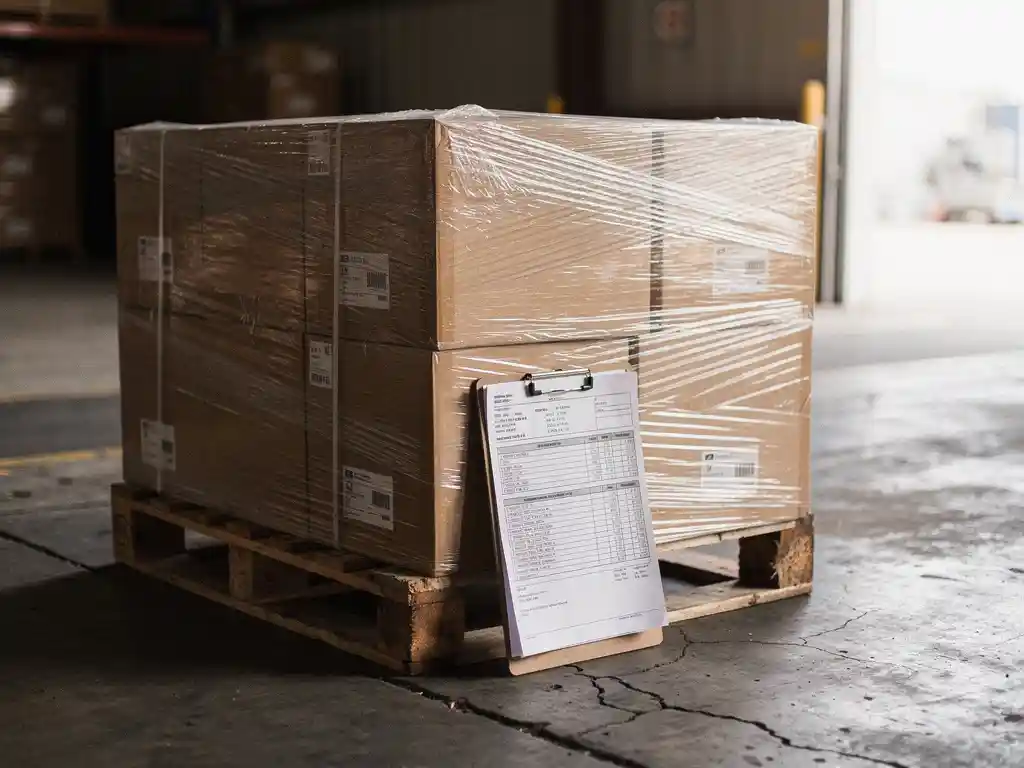
Groupage transport is one of the most cost-effective ways to move goods across Europe, but understanding what you actually pay per pallet can feel surprisingly difficult. Rates vary by carrier, lane, season, and shipment characteristics—and without a clear picture of how pricing works, it is easy to overpay or make planning decisions based on incomplete information. This guide breaks down everything transport planners need to know about groupage costs, from average benchmarks to the factors that move the needle on your invoice.
What is groupage transport, and how does it work?
Groupage transport is a shared freight model in which multiple shippers consolidate their goods into a single truck or trailer. Each shipper pays only for the space their cargo occupies, while the carrier fills the remaining capacity with other consignments traveling in the same direction. This makes it a practical and affordable option for shipments that do not fill an entire vehicle.
In practice, a carrier collects parcels or pallets from several different senders, brings them to a consolidation hub, and sorts them onto outbound vehicles grouped by destination region. The goods travel together to a distribution hub closer to the final delivery points, where they are sorted again and delivered individually. This hub-and-spoke structure is what makes groupage efficient at scale.
For transport planners, groupage sits between parcel services and full truckload in terms of shipment size, typically covering consignments of one to roughly fifteen pallets. It is the go-to mode when a shipment is too large for a parcel carrier but too small to justify booking an entire truck.
What is the average cost per pallet in groupage transport?
The average cost per pallet in European groupage transport typically ranges from around €30 to €120 per pallet, depending on the lane, pallet dimensions, weight, and service level. Short domestic lanes sit at the lower end of that range, while cross-border shipments to more distant or less-served regions push costs toward the higher end.
It is important to treat these figures as a starting point rather than a fixed benchmark. A standard Euro pallet traveling from the Netherlands to Belgium will cost significantly less than the same pallet moving to Spain or Poland. Fuel surcharges, peak-season premiums, and handling fees at consolidation hubs all add to the base rate and can shift your actual invoice noticeably.
Carriers rarely publish a single transparent rate card for groupage. Instead, pricing is typically negotiated based on volume commitments, frequency, and the specific trade lanes you use most. Building a clear picture of your own average cost per pallet over time is one of the most practical things a transport planner can do to benchmark performance and identify savings opportunities.
What factors affect the price per pallet in groupage?
The price per pallet in groupage transport is shaped by a combination of physical shipment characteristics, route-specific conditions, and commercial agreements. Understanding these factors helps planners anticipate costs and make smarter consolidation decisions.
Distance and lane density: Longer routes cost more, and lanes with lower freight volumes typically carry higher rates because carriers have less flexibility to fill trucks efficiently.
Pallet dimensions and weight: Oversized or heavy pallets consume more space and may be subject to surcharges beyond the standard rate.
Fuel surcharges: Most carriers apply a variable fuel surcharge indexed to diesel prices, which can add a meaningful percentage on top of the base rate.
Handling and accessorial fees: Liftgate delivery, timed delivery windows, hazardous goods, and additional hub handlings each add cost to the base shipment rate.
Seasonal demand spikes, particularly around peak retail periods and summer holidays, also push groupage rates upward as available capacity tightens across the network. Planners who can shift non-urgent shipments outside peak windows often find meaningful savings without changing carriers or lanes.
What’s the difference between groupage and full truckload pricing?
The key difference is that full truckload (FTL) pricing is based on the entire vehicle regardless of how much space you use, while groupage pricing is based on the space, weight, or number of pallets your shipment actually occupies. FTL gives you exclusive use of a truck; groupage shares that cost across multiple shippers.
For smaller shipments, groupage is almost always cheaper on a per-pallet basis because you are not paying for empty space. However, as shipment size grows, the economics shift. Once you reach roughly 12 to 15 pallets on many European lanes, a full truckload rate can become competitive with—or even cheaper than—groupage, especially when you factor in the faster transit times and reduced handling that FTL offers.
There is also a risk-profile difference worth considering. In FTL, your goods travel on a single vehicle with no intermediate handling, which reduces the chance of damage or delay at consolidation hubs. In groupage, multiple handlings increase both transit time and the statistical likelihood of minor damage. For high-value or fragile cargo, this is a relevant cost consideration even when the headline rate looks attractive.
How do carriers calculate chargeable weight for pallets?
Carriers calculate chargeable weight for pallets using the higher of two values: the actual gross weight or the volumetric weight. Volumetric weight is calculated by dividing the total volume of the pallet in cubic centimeters by a conversion factor, typically 333 for road freight. If your pallet is light but large, you will be charged for the space it occupies rather than its physical weight.
A standard Euro pallet measuring 120 × 80 × 120 cm has a volume of roughly 1.15 cubic meters. At a 333 kg per cubic meter conversion, its volumetric weight is approximately 383 kg. If the actual goods weigh less than that, the carrier charges based on the volumetric figure. This is why dense, compact shipments are more cost-efficient in groupage than bulky, lightweight ones.
Some carriers also apply a loading-meter calculation, which measures the floor space your pallets occupy in the trailer rather than just weight or volume. This method is common for non-stackable or irregularly shaped cargo and can result in higher charges if your pallets cannot be double-stacked. Always confirm which calculation method your carrier uses before comparing quotes.
How can transport planners reduce cost per pallet in groupage?
Transport planners can reduce cost per pallet in groupage by improving consolidation, optimizing shipment timing, and ensuring accurate pallet data. The biggest savings typically come from bundling orders going to the same region into fewer, fuller shipments rather than sending multiple small consignments separately throughout the week.
Reviewing your shipment patterns regularly reveals consolidation opportunities that are easy to miss when you are working reactively. Combining two half-pallet shipments into one full pallet, for example, can meaningfully reduce the per-unit cost while also reducing the number of handlings your cargo goes through.
Other practical levers include:
Accurate pallet dimensions: Submitting correct weight and volume data avoids correction surcharges and ensures you are quoted on the right rate tier from the start.
Flexible delivery windows: Removing tight time constraints opens up more carrier options and reduces premium service fees.
Negotiating volume-based rate agreements with your core carriers is also worth the effort if your groupage volumes are consistent. Carriers value predictable freight, and reliable volume often translates into better base rates and fewer ad hoc surcharges.
How LogicPlan helps with groupage planning
Reducing cost per pallet in groupage is not just about negotiating better rates—it is about making smarter consolidation decisions faster and more consistently than is possible by hand. That is exactly where we come in.
Our Groupage Planning Automation service uses AI agents to analyze live order data, carrier constraints, and route parameters in real time, automatically clustering shipments into optimized groups. Instead of manually bundling orders across multiple systems, planners get a consolidated load plan that reflects actual conditions—not yesterday’s assumptions.
What makes our approach different:
Planner-centric design: Built around real planning logic, not generic automation. The system learns your patterns and preferences over time, working with you rather than around you. Our coordination assistant ensures that every stakeholder stays aligned throughout the process.
Non-disruptive deployment: Works alongside your existing TMS via a browser extension—no migration, no downtime, operational within minutes of installation.
We want to be clear: LogicPlan is not here to replace transport planners. Our platform is a supportive tool that learns alongside you, handles the repetitive consolidation work, and surfaces the decisions that genuinely need your judgment. The goal is to make every planner more effective—not to automate them out of the picture. If you want to see how LogicPlan can help your team reduce groupage costs and planning time, get in touch with us today.
Frequently Asked Questions
How do I get started with benchmarking my current groupage cost per pallet?
Start by pulling 3–6 months of invoices from your main groupage carriers and calculating the total cost divided by the number of pallets shipped per lane. This gives you a realistic baseline per trade lane rather than a single blended average, which is far more actionable. Once you have lane-level benchmarks, you can compare them against market rates and identify where you are overpaying or where consolidation improvements would have the most impact.
What are the most common mistakes transport planners make when comparing groupage quotes?
The most common mistake is comparing base rates without accounting for surcharges—fuel, handling, liftgate, and peak-season fees can add 20–40% on top of the headline figure, making a seemingly cheap quote more expensive in practice. Another frequent error is submitting inaccurate pallet dimensions, which leads to correction charges at the hub that weren't in the original quote. Always request an all-in rate that includes applicable surcharges and double-check your shipment data before submission.
How does transit time in groupage typically compare to full truckload, and when does it matter most?
Groupage shipments generally take 1–3 days longer than FTL on the same lane because of the consolidation and deconsolidation handling at intermediate hubs. For time-sensitive cargo—such as perishables, production-critical parts, or retail replenishments ahead of a promotional period—this extra transit time can outweigh the cost savings of groupage. For non-urgent stock replenishment or less time-sensitive B2B deliveries, the transit difference is usually acceptable and the cost advantage of groupage is well worth it.
What should I do if my groupage shipment is consistently arriving damaged?
Repeated damage in groupage usually points to one of two root causes: inadequate pallet packaging for multi-handling environments, or a specific hub in the carrier's network where sorting is rough. Start by reviewing whether your pallets are stretch-wrapped, corner-protected, and within the carrier's height and weight limits—groupage cargo goes through more touchpoints than FTL and packaging needs to reflect that. If packaging is solid, raise the issue formally with your carrier and ask which hub handlings are on the route, as switching to a carrier with fewer intermediate stops on that lane is often the most effective long-term fix.
Is it worth negotiating a volume-based rate agreement if my groupage volumes are relatively small?
Yes, even modest but consistent volumes are worth negotiating on—many carriers will offer improved rates for as few as 20–30 pallets per month on a regular lane if the freight is predictable. The key is consistency: carriers value reliable volume they can plan around more than occasional large shipments. If your volumes are too small to negotiate directly with a carrier, consider working through a freight forwarder or 3PL that already has volume agreements in place and can pass on better rates.
How do peak seasons specifically affect groupage pricing, and how far in advance should I plan?
Peak periods—primarily pre-Christmas (October to mid-December), post-summer (late August to September), and Easter—can push groupage rates up by 10–25% on high-demand lanes as available trailer space tightens across carrier networks. Booking capacity 2–4 weeks ahead of a known peak, rather than on a spot basis, is the most reliable way to lock in standard rates and avoid last-minute surcharges. Where possible, shifting non-urgent shipments to the weeks just before or after a peak window can deliver meaningful savings with no change to your carrier relationships.
Can I use groupage transport for hazardous goods, and what extra costs should I expect?
Yes, most major groupage carriers handle ADR (hazardous goods) shipments, but not all carriers accept every hazard class, and availability varies significantly by lane. Expect a dedicated ADR surcharge—typically €15–€50 per consignment depending on the carrier and hazard class—plus potential restrictions on co-loading with certain other cargo types, which can limit consolidation options. Always declare hazardous goods accurately at booking, as misdeclaration is not only a safety risk but also a common source of significant penalty charges and shipment refusals at the hub.
Next blog