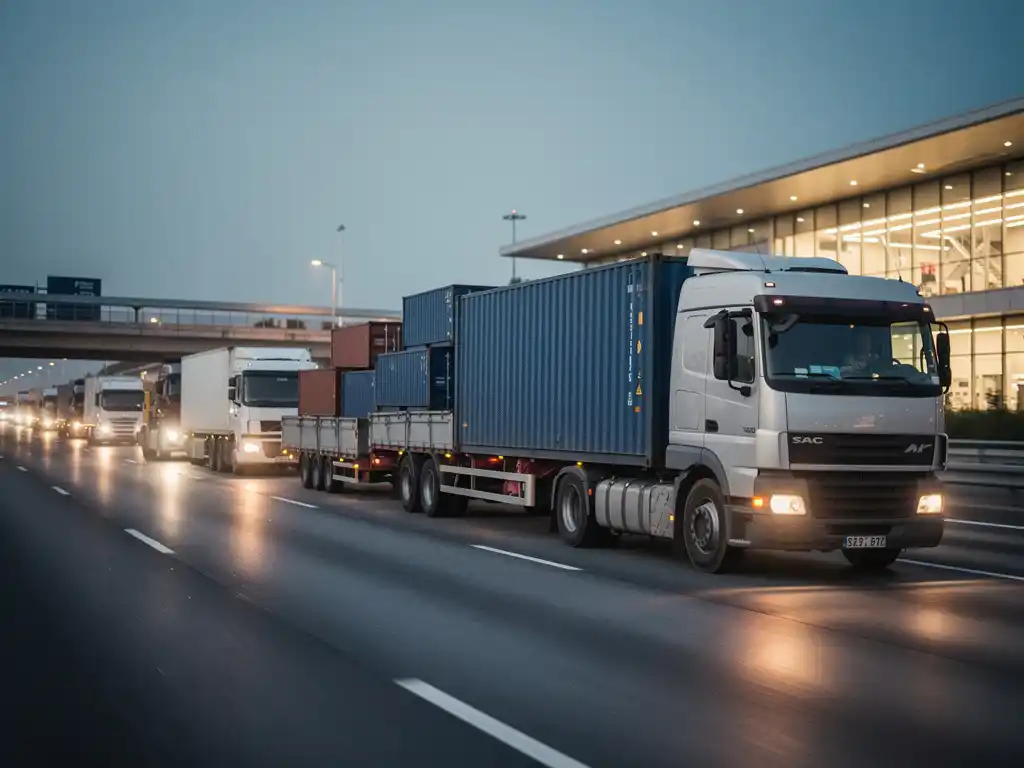
Groupage transport is one of the most complex and dynamic segments of the logistics industry. As supply chains grow more fragmented and customer expectations rise, the pressure to deliver efficient, flexible freight consolidation has never been greater. Understanding where groupage transport is headed—and how technology is reshaping it—matters enormously for every transport planner working in the field today.
This article explores the most important questions surrounding the future of groupage transport, from how it works and why it is under strain to what AI-driven planning and sustainability efforts mean for the road ahead.
What is groupage transport and how does it work?
Groupage transport is a freight model in which multiple smaller shipments from different customers are consolidated into a single vehicle load. Rather than booking a full truck for one consignment, carriers group compatible shipments by route, destination, and timing, sharing capacity and cost across multiple senders. This makes it an efficient and cost-effective option for businesses that do not generate full truckload volumes.
In practice, groupage works through a hub-and-spoke or cross-dock network. Shipments are collected from multiple origins, brought to a consolidation point, sorted, and then redistributed on outbound routes to their respective destinations. The planning challenge lies in matching shipments intelligently, factoring in delivery windows, load compatibility, vehicle capacity, and driver hours. When done well, groupage maximizes vehicle fill rates and significantly reduces the cost per shipment.
Why is groupage transport under pressure right now?
Groupage transport is under pressure because the complexity of modern freight has outgrown the tools traditionally used to manage it. Rising e-commerce volumes have increased the number of smaller, time-sensitive shipments. At the same time, driver shortages, fuel costs, and tightening emissions regulations are squeezing margins on every route. Planners are being asked to do more with less—faster than ever before.
The core operational challenge is volatility. Last-minute order changes, cancellations, and new bookings arriving throughout the day make static planning unreliable. A plan built at 7 a.m. can be partially obsolete by 9 a.m. Traditional rule-based systems struggle to adapt in real time, which means planners end up manually correcting plans under time pressure, increasing both stress and the risk of errors.
How is AI changing the planning of groupage transport?
AI is changing groupage transport planning by replacing static, rule-based consolidation logic with adaptive, real-time decision-making. Instead of running a fixed optimization once and hoping conditions hold, AI planning assistants continuously monitor incoming orders, carrier availability, and route parameters, regrouping shipments dynamically as the operational picture changes throughout the day.
This shift has a direct impact on planning quality. AI can evaluate far more combinations of shipments, routes, and carriers than a human planner can process manually, identifying consolidation opportunities that would otherwise be missed. When a cancellation arrives or a new urgent order is added, the system recalculates affected groupings immediately rather than waiting for the next planning cycle. The result is fewer empty kilometers, better vehicle utilization, and significantly less time spent on reactive replanning.
What is the difference between traditional and AI-driven transport planning?
The key difference is adaptability. Traditional transport planning relies on fixed rules and batch optimization, producing a plan at a set point in time that remains largely static until the next planning run. AI-driven planning is continuous and responsive, adjusting decisions in real time as new data arrives, exceptions occur, and conditions shift.
Consider how each approach handles a Monday morning with multiple incoming changes:
Traditional systems require a planner to manually identify affected shipments, check carrier options, and rebuild parts of the plan by hand.
AI-driven systems detect changes automatically, assess the impact across all affected groupings, and generate a revised plan within minutes.
It is important to note that AI-driven planning is not about removing the planner from the equation. The best implementations are built as supportive tools that work alongside human judgment, not in place of it. The planner retains oversight, approves exceptions, and applies contextual knowledge that no algorithm can fully capture. AI handles the repetitive, data-heavy work so planners can focus on decisions that genuinely require their expertise.
How can groupage transport become more sustainable?
Groupage transport can become more sustainable by improving consolidation quality, reducing empty kilometers, and optimizing route efficiency. Because groupage already shares vehicle capacity across multiple shippers, it is inherently more efficient than individual full-truck movements for smaller loads. The sustainability gains come from improving consolidation, filling vehicles more completely, and designing routes that minimize total distance traveled.
Smarter planning directly supports lower emissions. When shipments are grouped more intelligently and routes are optimized continuously, fuel consumption drops. Predictive tools can also help with maintenance scheduling, reducing breakdowns that cause unplanned detours and idle time. For transport companies facing pressure from emissions regulations and customer sustainability requirements, a coordination assistant is one of the most practical levers available to improve planning efficiency and reduce environmental impact.
What does the future of groupage transport look like by 2030?
By 2030, groupage transport will be defined by real-time, AI-orchestrated planning that operates continuously rather than in scheduled cycles. The planning process will shift from a task planners perform at the start of the day to a live, adaptive system that responds to events as they happen, with planners guiding and supervising rather than manually executing every decision.
Several trends will shape this future:
Deeper integration between AI planning layers and existing TMS platforms, enabling smarter decisions without requiring full system replacements.
Greater use of predictive intelligence to anticipate demand patterns, carrier performance, and disruption risks before they materialize.
The planners who thrive in this environment will be those who work with intelligent tools that learn from their decisions and adapt to their operational context, building a collaborative dynamic between human expertise and machine capability.
How LogicPlan helps with groupage transport planning
LogicPlan addresses the core challenges of groupage transport through our AI-powered Groupage Planning Automation service. Rather than replacing the planner, we build a system that learns alongside them, adapting to individual planning patterns, remembering exceptions, and improving over time. Our approach is deliberately planner-centric, designed around real planning logic rather than generic automation frameworks.
Here is what that looks like in practice:
Live order analysis that clusters shipments into optimized groupings in real time, reflecting actual carrier constraints and route conditions.
Seamless deployment via a browser extension, working alongside your existing TMS without any migration or disruption to current workflows.
Operational within minutes of installation, with adaptive intelligence that grows more precise the longer it works with your team.
We do not believe AI should replace the judgment of experienced transport planners. We believe it should handle the repetitive, data-heavy workload so planners can focus on what they do best. If you want to see how LogicPlan can support your groupage operations, get in touch with our team today.
Frequently Asked Questions
How long does it typically take to implement an AI-driven groupage planning system, and will it disrupt our current operations?
Implementation timelines vary depending on the solution, but modern AI planning tools are increasingly designed for minimal disruption. Solutions like LogicPlan, for example, deploy via a browser extension and can be operational within minutes, working alongside your existing TMS rather than replacing it. The key is to look for tools that integrate with your current workflows rather than requiring a full system migration, which can take months and introduce significant operational risk.
What kind of data does an AI groupage planning system need to get started, and what if our data quality is poor?
At a minimum, AI planning systems need access to order data (origin, destination, weight, volume, delivery windows) and carrier or vehicle availability. Poor data quality is one of the most common implementation challenges, but most systems can begin delivering value even with imperfect inputs, improving as data quality improves over time. A practical first step is to audit your most critical data fields—delivery windows and load dimensions—since these have the greatest impact on consolidation quality.
How do we measure whether our groupage planning has actually improved after adopting AI tools?
The most meaningful KPIs to track are vehicle fill rate, empty kilometer percentage, number of manual replanning interventions per day, and on-time delivery performance. Establishing a clear baseline before implementation is essential so you have a genuine point of comparison. Many operations also track planner time spent on reactive corrections as a proxy for planning quality, since a reduction in firefighting is one of the earliest and most visible signs that AI-assisted planning is working.
Can AI-driven groupage planning handle highly irregular or seasonal freight volumes, or does it only work well with stable, predictable demand?
AI planning systems are actually better suited to irregular and volatile demand than traditional rule-based tools, precisely because they adapt in real time rather than relying on fixed assumptions. During seasonal peaks or sudden demand spikes, adaptive systems can regroup shipments, reassign carriers, and recalculate routes continuously as the volume picture changes throughout the day. The more historical data the system has access to, the better it can also anticipate recurring seasonal patterns and pre-position capacity accordingly.
What happens when the AI makes a grouping decision that an experienced planner knows is wrong for a reason the system cannot see?
This is exactly why the best AI planning implementations are designed to support rather than override human judgment. Planners should always retain the ability to review, adjust, and override system-generated groupings, and any override should be treated as a learning signal that helps the system improve its future recommendations. Contextual knowledge—a difficult customer, a carrier with a known reliability issue on a specific lane, a shipment requiring special handling—is precisely where experienced planners add irreplaceable value that no algorithm can fully replicate.
Are smaller transport companies or freight forwarders with limited IT resources able to benefit from AI groupage planning, or is it only viable for large operators?
AI groupage planning is increasingly accessible to smaller operators, particularly as solutions move toward lightweight deployment models that do not require dedicated IT infrastructure or lengthy integration projects. The key is to evaluate tools based on their actual deployment requirements rather than assuming enterprise-level complexity. For smaller operations, even modest improvements in vehicle fill rate and a reduction in manual replanning time can deliver a meaningful return, often making the business case straightforward.
How should transport planners think about upskilling or preparing for a future where AI handles more of the routine planning workload?
The most valuable skills for planners in an AI-assisted environment are exception management, supplier and carrier relationship oversight, and the ability to interpret and critically evaluate system recommendations rather than simply execute them. Planners who invest in understanding the logic behind AI-generated groupings—and who develop confidence in knowing when to override them—will be best positioned to thrive. Rather than viewing AI as a threat to the role, the most practical mindset is to treat it as a tool that elevates the planner's focus toward higher-value, judgment-intensive decisions.
Next blog